Why Silence Is Dangerous: The Sex-Wise Playbook for Kinship Caregivers
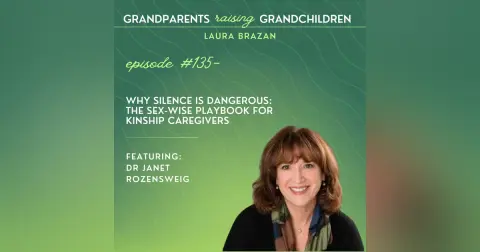



Key Takeaways
- Accurate, age-appropriate information about body safety is a critical protective factor that gives children a voice and shields them from online and offline predators.
- Kinship caregivers and parents can establish household boundaries and privacy rules early to normalize communication and dismantle the shame exploited by bad actors.
- Dr. Janet Rosenzweig emphasizes that parents and caregivers have an unquestioned right to share healthy sexuality and safety education rooted in family values.
- Scrutinizing schools, sports leagues, and youth programs by asking upfront safety and locker room policy questions creates community norms that protect all children.
- Protecting Medicaid funding is essential for underwritten mental health and support services that children and kinship families relying on the child welfare system desperately need.
The kitchen table is not a hiding place—it’s your boardroom. Grandparents and kin caregivers are not just enduring the fallout of a broken system; you are the frontline, demanding justice, resources, and lasting change for your families. The days of surviving in silence are finished. This episode arms you with real-world strategies, radically honest language, and a call to challenge every system that fails our kids.
Dr. Janet Rosenzweig, a nationally recognized child welfare expert and author, joins us with the unfiltered truth and the actionable playbook you need to transition from quiet survivor to a grassroots leader fighting for trauma-informed policy, Medicaid protection, and economic justice.
Key Takeaways:
- Expose the Hidden Foster Care Crisis: We unveil how kinship families shoulder trauma while states downplay their sacrifice—and why keeping quiet only helps abusers and bureaucrats.
- Demand Economic Equity and System Reform: Discover why Medicaid, housing, and funding for trauma services aren’t frills or favors—they are non-negotiable rights for every kin caregiver.
- Hold Every Institution Accountable: Get the concrete steps to interrogate youth organizations and schools, making safety, transparency, and accountability the new standard.
- Break Silence, Build Safety: Learn why using real language and setting clear household boundaries dismantles shame, empowers children, and disrupts cycles of abuse.
Dr. Janet Rosenzweig brings a lifetime of expertise in child welfare, sex education, and public policy. With advanced degrees from Rutgers and Harvard’s Kennedy School, she has led at the state and national level, advised public and private organizations, and authored The Sex-Wise Parent, a trusted guide for caregivers determined to protect and empower children with resilience and knowledge. Dr. Rosenzweig is relentless in her advocacy for trauma-informed systems and practical, honest resources for families.
Order her book, "The Sex-Wise Parent" and find empowering resources at www.sexwiseparent.com.
Your call to action:
Share your story, contact your representatives, and pass this episode to others who refuse to accept silence and shame as protection. Change starts at your kitchen table. The reform our children deserve begins now.
New! Grandparents Raising Grandchildren Online Support Circle! Starting Wednesday, October 7th, we meet every other Wednesday from 12:30 PM to 2:00 PM Eastern.
A peer-first, confidential space—free from cross-talk, judgment, or unsolicited advice. Guided by certified therapists, specialized family coaches, and counselors who truly understand kinship care.
When we look at the child welfare system today, it’s clear that the framework we've inherited is completely outdated. We keep trying to "fix" programs, but what if the problem isn't just funding or execution? What if the problem is how we frame the issues in the first place?
Ali Caliendo, founder of the Kinship Policy Lab, reminded us that the questions we ask determine the policies we write, the data we collect, and the outcomes we pursue.
I want to know how you’re doing. Is the podcast giving you what you need? What support are you missing most right now? Send me a Direct Message on Facebook or Instagram or email me directly at laurabrazan@grandparents-raising-grandchildren.org. I read and reply to every message because this community is built on supporting each other!
Thank you for tuning into today's episode. It's been a journey of shared stories, insights, and invaluable advice from the heart of a community that knows the beauty and challenges of raising grandchildren. Your presence and engagement mean the world to us and to grandparents everywhere stepping up in ways they never imagined.
Remember, you're not alone on this journey. For more resources, support, and stories, visit our website and follow us on our social media channels. If today's episode moved you, consider sharing it with someone who might find comfort and connection in our shared experiences.
We look forward to bringing more stories and expert advice your way next week. Until then, take care of yourselves and each other.
Want to be a guest on Grandparents Raising Grandchildren: Nurturing Through Adversity? Send Laura Brazan a message on PodMatch, here: https://www.podmatch.com/hostdetailpreview/grg
Liked this episode? Share it and tag us on Facebook @GrandparentsRaisingGrandchilden
Love the show? Leave a review and let us know!
CONNECT WITH US: Website | Facebook
"We are more than a " - Laura Brazan
Frequently Asked Questions
Who is Dr. Janet Rosenzweig?
Dr. Janet Rosenzweig is a nationally recognized child welfare expert, author, and sex educator with advanced degrees from Rutgers and Harvard's Kennedy School who specializes in child sexual abuse prevention and family advocacy.
What is 'The Sex-Wise Parent'?
Authored by Dr. Janet Rosenzweig, 'The Sex-Wise Parent' is a trusted guidebook designed to help parents and kinship caregivers navigate healthy sexuality, body safety, and trauma-informed education for children.
How can kinship caregivers audit school and youth organization safety?
Caregivers can use questionnaires provided in resources like 'The Sex-Wise Parent' to ask program directors and coaches upfront questions about locker room policies, cell phone restrictions, and safety protocols.
Why is Medicaid important for kinship care families?
Medicaid underwrites critical public mental health services, medical care, and specialized support programs that children involved in the child welfare system require for healing from trauma.
00:00 - Supporting grandparent caregivers
06:39 - Starting in child sex abuse work
08:04 - Lack of training in human sexuality
12:51 - Addressing online exploitation of kids
17:09 - Advocating for Neurodivergent Kids
22:05 - Importance of SSNR in development
24:55 - Discussing Privacy and Boundaries for Kids
28:01 - Separating behavior from identity
33:20 - Securing community health mini grants
34:42 - Establishing household privacy rules
Supporting grandparent caregivers
SPEAKER_00When we don't give traumatized children the real names for their bodies, we don't protect their innocence. We rob them of their voice. The moment a bad actor uses their body against them, silence becomes the perpetrator's greatest weapon. Today we strip away the embarrassment, audit the system, and reclaim board level control over safety in our homes. Welcome to Grandparents Raising Grandchildren, Nurturing Through Adversity. In this podcast, we will delve deep into the challenges and triumphs of grandparents raising grandchildren. As we navigate the complexities of legal, financial, and emotional support, I invite you to join us on a journey of exploring thoughts, feelings, and beliefs surrounding this growing segment of our society. Drawing from real stories and expert advice, we will explore the nuances of child rearing for children who have experienced trauma and offer valuable resources to guide you through the intricate journey of kinship care. We'll discuss how we can change the course of history by rewriting our grandchildren's future, all within a supportive community that understands the unique joys and struggles. This podcast was made especially for you. Welcome to a community where your voice is heard, your experiences are valued, and your journey is honored. When we step up in crisis to take in our grandchildren, we are handed kids who've often lived through unthinkable instability. We pour our hearts into building a sanctuary, but so many of us sit at home in the quiet hours of the night, terrified of the invisible threats, the online predators, the unspoken trauma, the taboo topics we were never taught to navigate ourselves. We worry that bringing up body safety will ruin their childhood, when in reality, accurate information is the single most powerful shield we can give them. Today we're joined by Dr. Janet Rosenspeig, a powerhouse in child welfare with degrees from Rutgers and Harvard's Kennedy School. She's handing us the exact executive playbook to eliminate shame, demand accountability from youth organizations, and lead our households with clarity and strength. Good morning, Dr. Rosenspeig. Thank you for having me. It's a pleasure. This topic is one that many caregivers struggle with because we've stepped up in crisis. We have taken these traumatized children without knowing how to heal and protect them. Some of these issues that we're going to talk about today are ones that either maybe we weren't so aware of when we were raising our own children, or it's become more important for us to deal with some of these issues, especially because of the trauma. So, in your decades of leading state-level child welfare and national organizations, at what point did you realize that the state's failure to equip caregivers with explicit real-world tools for child safety and body sovereignty was creating a second wave of preventable harm in homes?
SPEAKER_01Well, that's a funny question for me to start with because I can remember 1984. How many years ago was that? I was actually contracted with by the state of Texas to do foster parent training on this very issue. So it's not you know, some states were more forward than others. So it's really a matter of, you know, who was doing what. I think back to the time, you know, 1984, I was a kid. Why would these foster parents be listening to the kid no matter how many degrees she had after her name? But I did get the message out, at least in the state where I was working at the beginning of my career, people realized how important it was for the foster parents, the grandparents, the caregivers who were to taking in and loving kids that had been victimized to help them develop healthy sexuality. And I think we've gone through a period where that all got quashed. The 90s was a decade of abstinence only. Don't talk about sex. If you're worried about abuse, go look something up on a registry. So the 90s really quieted everybody down. And so many people raising kids now grew up in the 90s and didn't get access to good information. And thank goodness now people are starting to pay attention and know that accurate information about sexuality is an incredibly strong protective factor.
SPEAKER_00So this is something you've been involved with and interested in for most of your career?
Starting in child sex abuse work
SPEAKER_01I came into the work as a certified sex educator. And I was recruited to work on a child sex abuse project where they had money to hire two people. So they hired one child protective worker and one sex educator and basically put us together and said, okay, figure it out, because this was 1980 before anybody really knew what sex abuse was. So once I started working in the field of sexual abuse, there was nowhere else that my knowledge as a sex educator was more important. There were no, very few sex educators working in the sex abuse field. And the longer I worked in the field, the more obvious it became to me how important information is for kids. While I'm a fan of qualified sex educators sharing information in schools and youth organizations and faith-based organizations, I know that that gets controversial in many communities. Yes. So I've chosen to focus my energies on getting information to parents and caregivers because no one will ever question a parent or caregiver's right to share information about sexuality and sexual health with their kids. Yes.
SPEAKER_00How have you seen in the system that welfare agencies and educational systems avoid trauma-informed safety education and the necessary therapeutic resources required to protect children?
SPEAKER_01Um,
Lack of training in human sexuality
SPEAKER_01I think more and more people are paying attention to being trauma-informed. So trauma-informed, from where I've sit, I've seen many, many poor people pay attention to that. When we talk about the sexuality or sexual trauma, I think we don't have enough people in the field that are trained in the basics of human sexuality. You know, that you can go all through college for social work or psych or whatever your degree is in, and never take a single course in human sexuality, right? So you get into the positions and you may know all about, you know, child development and cognitive development, moral development, and you know, per parental attachment. But if you never had a couple of good, even one good basic course on human sexuality, you may not feel equipped to help families deal with the crises. So you know, I really applaud the states that make sure people have that training. A big piece of what I do now is I travel to different conferences and I train people on the basics of humans. I have a chapter in the sex-wise parent, everything you should have learned in high school and probably didn't. And I'll do the, you know, just a two-hour workshop, you know, walking professionals in child welfare and child protection through understanding the basics of human sexual anatomy, human sexual response, understanding the reproductive cycle, because you need that basic cognitive information that so many of our professionals, you know, working now, they just never got in high school or college.
SPEAKER_00I was going to ask you across the board on a statewide level, how many states would you say are actually educating their welfare directors, their education directors about the trauma issue side of it?
SPEAKER_01I think trauma-informed intervention has become almost universal, at least in policy, right? Whether they have the resources to adequately deploy that down to the people directly working with families, trauma-informed care is really, really the buzzword of the 21st century in trauma in child welfare. Okay. Where we don't see as much uniformity as understanding human sexuality and human sexual response. And in order for people to, you know, foster parent or grandparent or care give to kids that have been through a sexual crisis, they need support to understand what's happening in the kid's body, what's happening for the kids developmentally. And the sex-wise parent is being picked up by some organizations as a tool to use to help parents and grandparents. It's still taboo to discuss these topics. It is taboo. It is becoming more and more repressive to allow people to have accurate information about sexuality. This is a time in our culture where talking about sexuality in the places where we need to. Schools' faith-based health systems is decreasing, but at the same time, nasty, nasty stuff about sexuality is proliferating like crazy in the virtual world. So our kids are learning about sex from, you know, predators' pornography, and they're not learning about it from people who can teach them with love and respect and you know that that family's values. So why do you think that is? Well, I think the internet and people's profit motivation and the the ease of access to kids that the internet has provided is very, very, very dangerous. And when we have kids who don't understand how their bodies work, they see something online, they talk to someone online, the person purposely elicits kind of the physical response from the kid with something they say or something they do. And if the kid doesn't understand that this is just perfectly normal what healthy's bodies do, it's way too easy to entrap them into going back and talking to that person again, going back and looking at that material again, which is why I so believe kids understanding how their bodies work is just a critical protective factor.
SPEAKER_00But why are we talking about it less? Why are our educational systems and families talking about it less?
SPEAKER_01I don't think it's a secret that in this political environment there have been organized moves to remove, I mean, removing Judy Bloom from school libraries. I mean, that's where a whole generation of girls learned about how it feels to get your period. I mean, there's an entire movement that trickles down to the community level that says, we're not talking about the stuff at school anymore, right? That's why we need to be talking about it at home. We need to be talking about it at our faith-based institutions.
SPEAKER_00We need to eliminate that shame system that these perpetrators exploit.
Addressing online exploitation of kids
SPEAKER_01Well, when we talk about eliminating shame, I'm going to digress just a minute a little bit because there's something that I feel very strongly about. And we know now that kids are being exploited online, kids are being exploited by having bad actors, you know, blackmail them into sending nude photos. And even if the kid is not being blackmailed into sending nude photos, people are doing deep fake AI generated nude photos. And when those photos get distributed, kids, you know, are humiliated. And they've, you know, there have been suicide attempts and completed suicides associated with that. One of the things that I'm on a crusade for is that starting in the families, we all teach our kids and grandkids, every kid whose ear we have, that we never shame a victim. That if nude photos of anybody get circulated among your school or your crowd, you stand up for the kid in the picture and say, that's horrible that someone did that to them. If we can change our cultural norms and remove that shame, we will take the biggest tool the bad actors have of dragging these kids into relationship. It's calling it sexploitation and keeping it there. So I really urge all of our parents that are listening, all of our grandparents that are listening, to know that you individually, starting in your home, have the capability of changing the culture around how we respond to kids who have been victimized with nudes, whether they're real or deep fake. That's a wonderful message. Thanks.
SPEAKER_00Dr. Janet, what can we do on an executive level in terms of scrutinizing schools and sports leagues and youth programs by demanding some transparency about this issue? What how do you suggest we I love that question?
SPEAKER_01Actually, in the Sex Wife Parent, I've got like questionnaires like parents can actually ask when you enroll your kid in a program. Oh, that's great. And I've encouraged people to take a look at that. Research has shown that once a lot of parents are afraid to ask, right? Oh, if I ask the coach, then my kid won't, he'll sit on the bench all season, right? Right. But if all of the parents ask, it becomes the norm. And we also know that once a parent asks once, hey, what are your safety policies? Hey, what are your policies in the locker room? What's your policies about kids having their cell phone at sleepovers if you're kind of in a dorm? Once parents ask the question once, they're much, much, much more likely to keep asking it again and again. So if all parents ask, then no parent has to worry about being singled out as the quote-unquote troublemaker that if I ask, my kid is going to be treated differently.
SPEAKER_00So as a parent, um, I have kids that are in sports. Would I speak directly with the other parents of those team members then about this issue and say, how do you feel about this?
SPEAKER_01Yeah, uh that's one way to do it. I think the the ultimate goal is for the team or organization to have a very, very good policy and for parents to have access and know what the policy is. So you start by asking, hey, what are your safety policies? You know, and I have a list of all the questions to ask in Sex Wise Parent. And then once you know they have policies, you want all the parents to be able to have access to it and share it.
SPEAKER_00Thanks. Well, I'm glad you've written the book that way. Do you think that there are systematic blind spots for youth with intellectual development disabilities? Because I know that caregivers advocate fiercely for their tailored safety and mental health needs. And I know in my particular case, I have a granddaughter who has quite a few challenges and she was exposed to sexual abuse. I love advocating even more intensely for these kids. I think we're a little looser in our uh society with children that we'll call more normal. And yet in schools, we're very inclusive of wanting to uh have
Advocating for Neurodivergent Kids
SPEAKER_00neurodiverse children or children with special needs be a part of a whole classroom. So how do we how do we advocate more fiercely for them?
SPEAKER_01Well, the first thing to do is kind of learn as much as you can about what they need. I'm a firm believer, and I spent lots of years in government, that if someone comes to a government official with a problem, they should also come to the government official with a proposed solution, right? And and then you're much more likely to see action. If you just go and say, you know, I don't like this or this isn't meeting my kids' needs, it's going to take way longer. But if you by, you know, parent support groups looking in in the literature and say, hey, a kid with my child's diagnosis needs A, B, C, or D, and this is the best way to get it, you're much more likely to see action. There's also, you know, power and numbers that if multiple parents group together and advocate, you're likely to see it. There's more work being done around GLBTQ kids than there are about neurodivergent kids in sex abuse prevention. I have material in the sex-wise parent. I've been, you know, speaking to some other experts about it. But what we need is people that are trained in the various types of special education, because as you know, every neurodivergent kid is not the same. So when we find the educators that are trained in a specific area, that if those people also had human sexuality and sex abuse prevention added to their skills, they're a real asset to every community.
SPEAKER_00Well, what I hear you saying is be proactive. Don't ask how to help me say here's what I want, not how can you help my kid?
SPEAKER_01Yes. Yes. And here's what our community needs, right? Because you always want to approach the public official as this is for the good of the community, right? And this'll this'll make you look good back out in the community when we get this thing accomplished. I remember once when I was early in my career, you know, a group of us you know advocates before I was in government were talking to a legislator, and finally he banged the table and said, Guys, stop telling me what's wrong. Tell me what you need me to do about it. Yes. Boy, that that that senator's voice has been in my ear my entire career, and I find it really good advice. And again, in this ex-wife's parent, I give parents lots of action steps they can take. Matter of fact, the last chapter is how to determine if your community has everything it needs. I really want people to kind of combine what they can do in their families and what they can do in their communities to keep everybody sexually safe and healthy. I love that.
SPEAKER_00Let's talk about your book, The Sex Wise Parent. Sure. You outline eight critical questions to audit the sexual climate of our schools and our youth organizations. When grandparents take grandchildren in who may have already experienced institutional or familial trauma, how can they use this framework to hold our school boards and community programs accountable?
SPEAKER_01The questions are pretty straightforward, and I don't think the questions vary based on the
Importance of SSNR in development
SPEAKER_01capabilities of the child. I think what's important to remember is, you know, there's a term that's getting thrown around in the trauma-informed world called SSNR, safe, stable nurturing relationship. It's kind of a play on the kind of there's a drug with similar letters, but within the trauma-informed world, there's a very strong belief, research-based, that if a kid has got a safe, stable, nurturing relationship, that builds the foundation for them to continue in their growth and development, growing away from the trauma that they experienced. So for when your child sees you going to their school, going to their athletic organization, that's just another way of your child seeing that you're a safe, stable, nurturing parent. So even if you don't get every single thing you want from that school or that youth agency, your child knowing you did that is a second and not unimportant benefit of taking those kind of advocacy steps. Great point. Great point. Where can our listeners find your book? Well, it's available at all the major online retailers. If people would think about it, they might suggest to their local libraries that their libraries order it. That way they get it and make sure that it gets in the hand of other parents as well. That would be great. Um the basic online booksellers have it, and uh I'm happy to say it's doing well.
SPEAKER_00Great. I think it should be. And where do our listeners find information about you, Dr. Janet?
SPEAKER_01My website is sexwiseparent.com, and they can come to that site and find resources on all the topics we've talked about. They can find all my latest blog posts. I write for our Philadelphia newspaper, they can find my columns there. So come to sexwiseparent.com and you know find all kinds of new information and resources for both caregivers and professionals.
SPEAKER_00That's great. And I'll provide all those links in the show notes as well. Okay. Well, there's three questions that I ask all of my interviewees. One is a systematic question, uh, one is a taboo question, and one is a policy question. In child welfare, silence and euphemisms are dangerous. And you make a sobering point in your book that kids who lack language for their bodies lack the words to report abuse. How does parental silence unknowingly create a vulnerability that perpetrators exploit? And how do you believe the state's reluctance to support comprehensive body safety education directly contribute to this ongoing crisis of unreported child abuse in vulnerable households? That's a lot to unpack, but let me give it a shot.
SPEAKER_01Clearly, when parents or primary caregivers
Discussing Privacy and Boundaries for Kids
SPEAKER_01don't talk about the certain parts of the body, kids learn not to talk about that part of the body. And my goal is for a child to grow up learning that every part of their body is equally important and they're equally able to ask questions about it or seek help about it. When parents encourage the discussion of every part of their body, that helps a child learn that that's okay. When a child is coming from one home to another home, maybe their birth parents to their grandparents or grandparents. To foster home, within the first couple weeks of the child joining that new family, we should talk about what are the rules in our house, right? And that's one way to bring it up. You know, who sees who and what level of undress? Do we wear robes to breakfast? Is it okay to walk around in our underwear? Do we close the door when we take a bath? And all of those things are getting at the point of in our household, we have rules about privacy and boundaries, and we want you to know them and we want to respect yours. So even though that's not talking about genitals, that's giving kids very clear messages that we pay attention to boundaries in this house, and we want you to know ours and we're willing to respect yours. So that's one really important place to start. Um when you talk about state systems, not talking about sexual health. I don't think all 50 states are the same. I think some states actually do a heft-decent job with it. I think also in many states, you may not find what you're looking for in child protection, but you may find it in your Department of Health. And your Department of Health is putting out wonderful information in various places around your state that you may not automatically find very quickly, but there's initiatives that are that are going on. And there are ways if we kind of seek the information, we're going to be able to find it. I think now is probably about the most conservative time I've seen in public systems since I started this work in the late 70s. And what that tells me is two things. You know, we have to take responsibility for sharing information at home. So kids go out into our communities with accurate information wrapped up in their families' values. And we have to advocate if we believe that something belongs in our schools or belongs in our communities, every parent's voice needs to be heard.
SPEAKER_00All great points. Yeah, thank you a great job of that, Dr. Janet. Thank you. The taboo question I have is a little loaded as well. Many grandparents that are stepping up to raise their grandchildren are doing so because of severe trauma, addiction, abuse involving their own adult children. And most of us grandparents are wanting to leave a greater legacy for our grandchildren. How can we, as caregivers, navigate this family stigma that's oftentimes passed down from one generation to another?
SPEAKER_01What that's that's a great question. And the simplest form of that answer is one that I was taught very young in my
Separating behavior from identity
SPEAKER_01work when I was a therapist working with families where sex abuse had occurred. And you know, to colloquialize it, we, you know, we love the person, it's their behavior that we don't approve of. You know, we love your mom, we love your dad, but the behavior that they've done is what we don't stand. So if we're able to separate the behavior from the person and know that we still have love in the most basic way for the person, we we don't want to raise the grandchildren to think that their parents were somehow bad people. They were people we love who made some not so great decisions, and we want to make sure that you grow up with better choices and ability to make better decisions.
SPEAKER_00Does that sort of get at where you're going? Absolutely, yes. I think it's a great answer. The last question that I have for you. Janet, if you were advising federal legislators tomorrow on rewriting family support mandates, what specific policy language would you institute to ensure that every nonparental caregiver has legal advocacy and economic support concerning the issue of promoting sexual health and safety for these kids that have lived through trauma the moment a child enters their home?
SPEAKER_01That's a great question and a really complicated one. In this context, I'm a little less concerned about needing new language around, you know, justice and advocacy because all through the United States now there's a network of child advocacy centers, federally funded. So, of course, I would say don't mess with the federal funds for the child advocacy centers, and kids and families that have been through sexual trauma in almost every community in the country have accessed kind of the legal and the justice support through their local child advocacy center. So I recommend folks know about child advocacy centers. And where can they find that information? If you look on, if you go to a search engine and just put in the words child advocacy center and the name of your county or the name of your community, you could also go to the website, the National Children's Alliance, who is the managing agency for all of the child advocacy centers in the country, and you can get a directory for where and find the child advocacy center in your community. And that is your go-to place for the legal advocacy for kids that have been through sexual trauma. Okay. On the healing and the prevention, we need to be much more broader. Yes, the child advocacy centers have some hand in healing. There's some really remarkable programs with very well-trained people. Um, one of the policy issues I would make very strongly is don't cut Medicaid. Because people hear Medicaid and they think, oh, it's poor people going to the doctor. Medicaid underwrites so many of the public mental health services that kids involved with child protection need and have access to. So if there is one single policy issue now that I think is critical, it's don't mess with Medicaid. We need Medicaid to keep underwriting the medical, the mental health, and the support services that families need. Then you take it to the kind of prevention and how do I how do I promote sexual health and safety in my home, right? I mean, you've got maybe kids of different ages living together that never did before. You know, the federal government never really meant for the child welfare system to do prevention. They just didn't. And I've studied the original legislation. The prevention end always should came out of the Department of Health. I mean, every state's got something called an RPPE, rape, rape prevention and education initiatives. Where is that money going in your community? That money often goes into high schools to promote sexual health and safety programs in high schools. But I really think the most important place families can go is within their faith community, right? Find someone within your faith community who's got a background in health and see if that person is willing to be the one that steps up and says, our faith community needs to support promoting sexual health and safety for families, and gather resources like the ones I make available. Gather resources like the ones that you can find on the different websites from the different health organizations. Give parents and caregivers the accurate information they need so they can share it with their families. So it's not just about the federal government. They should keep the money in place for treatment, but the the family and community level prevention work really has to come from the ground up.
SPEAKER_00I think that's a very interesting answer because we're trying to turn to our government to support caregivers across the board. But there is on a community level a very important involvement. And I think this is a perfect place to create that foundation for this subject. It's it's a tough subject to broach on a national level, but on a community level, and we certainly can support I love that. I love that idea.
SPEAKER_01And often, you know, state governments often have pots of funds they put out to promote community-based health. I know when I was a
Securing community health mini grants
SPEAKER_01county government official, we made mini grants of like $500 to, you know, any community-based organization that wanted to work on a specific health initiative, and we funded a lot of things like that. So you might want to, you know, does your county have a commission on the status of women? Does your county or your city have, you know, a child abuse commission? Because sometimes all it takes is a little $500 mini grant. And smart public officials know that, that a little bit of money to seed an idea can mobilize a community, and then your return on investment is like a hundredfold. So just, you know, get some energy and get some people together. If people can't find resources, they can use mine. They're on my website in the book. And let's get people together to get accurate information wrapped up in that family or faith traditions, values.
SPEAKER_00Thank you. Janet, it's been a pleasure talking with you. And I know this information is going to be so valuable to so many kinship caregivers. I'm really excited to read your book.
SPEAKER_01Yes, and feel free to share them, you know, when you're doing your groups and the other services for families you work with. Everything in that book was produced in a way that I wanted to be reproduced and shared. So let's get the resources out to the folks raising kids.
SPEAKER_00Yes. Well, thanks, Dr. Janet Rosen Schweig with The Sex Wise Parent. Dr. Janet reminded us today that
Establishing household privacy rules
SPEAKER_00culture doesn't change in state legislatures first. It changes right here in our home. Look at your home environment this week. Have you clearly established your household rules around privacy, undress, and digital boundaries? Take one concrete step today. Sit down with your children or grandchildren and walk through house rules on personal boundaries without shame. Or audit the safety policy of one youth organization or sports league your child attends. You are not just a caregiver, you are the chief executive of your child's sanctuary.