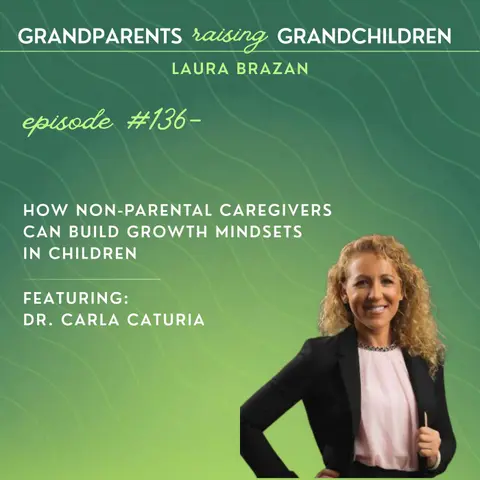
How to Build a Growth Mindset in Kinship Kids Using the 5 C's
When children enter kinship care carrying the heavy weight of early trauma, they often swing between two survival extremes: absolute perfectionism to prove their worth or complete emotional shutdown. As grandparents and relative caregivers, our instinct is often to step in, fix the problem, and push harder. However, elite mental performance coach Dr. Carla Caturia emphasizes that true resilience doesn't come from rigid pressure. By shifting our homes toward a growth mindset and utilizing structured tools like the 5 C's, we can help children decouple their self-worth from external performance and cultivate deep emotional safety.
Key Takeaways
- Kinship children often fall into a success-without-self trap, adopting extreme perfectionism or shutting down completely as a trauma survival mechanism.
- Caregivers must first regulate their own nervous systems and survival anxieties before attempting to guide a child through emotional distress.
- The 5 C's framework helps children catch, challenge, and rewrite negative self-talk by building personal evidence of success.
- Fostering genuine autonomy through natural consequences prepares children for long-term resilience far better than micromanagement or rigid rescuing.
Understanding the Trauma-Performance Link in Kinship Care
According to data from the Annie E. Casey Foundation, millions of children are being raised by relatives outside of traditional parental care. Many of these children carry profound developmental trauma. In school environments built entirely around metrics and standardized testing, these kids quickly learn that love and safety are conditional upon their output. They become straight-A students who look entirely fine on the outside while experiencing paralyzing anxiety on the inside.
When a child receives a bad grade or struggles with a difficult assignment, their internal survival mechanism interprets it as a threat to their entire identity. They might spiral into declaring, "I am stupid, I hate myself." Traditional parenting responses—such as barking orders, offering hollow praise like "Of course you're smart!", or doubling down on pressure—only reinforce hypervigilance. To break this cycle, caregivers must adopt a trauma-informed lens that looks beneath the surface of the report card.
Regulating the Caregiver First: The Foundation of Calm Leadership
Before we can teach emotional literacy to a child, we must audit our own reactions. When our grandchild spirals over a lost homework assignment, our own generational conditioning and survival anxieties bubble to the surface. We feel the urge to micromanage to keep the household from collapsing.
Dr. Carla Caturia highlights a fundamental truth of caregiving: you cannot co-regulate a dysregulated child if you are dysregulated yourself. Grandparents must actively carve out time for movement, meditation, or personal grounding practices. Putting your own oxygen mask on first isn't selfish; it is the absolute prerequisite for leading your family with a warrior's heart. When you learn to pause, breathe, and approach a crisis with a calm nervous system, you model the exact emotional regulation you wish to see in your home.
For additional guidance on managing second-time parenting stress, explore these proven caregiver self-care strategies and our Invisible CEO framework resources.
Rewiring Negative Self-Talk Using the 5 C's
Shifting a child from a fixed mindset to a growth mindset requires intentional, structured dialogue. When a child is consumed by self-doubt or defeatism, telling them they are wonderful rarely works because their internal evidence contradicts it. Instead, we must guide them through the process of building a new mental case file.
Dr. Carla utilizes the 5 C's framework to help youth navigate emotional blocks:
- Catch: Help the child catch their automatic negative thoughts in the moment rather than assuming "this is just how I am."
- Challenge: Prompt them to examine the thought. Ask gentle, curious questions like, "Where did that thought come from? Who told you that you were stupid?"
- Collect Evidence: Guide them to look at the broader picture. If they failed a math quiz today, remind them of the successful project they completed in science last week.
- Construct a New Narrative: Support them in building a powerful, growth-oriented belief to starve out the old, limiting story.
- Commit to Action: Encourage them to act as if they are capable and resilient individuals, reinforcing the new identity through consistent daily habits.
For legal and educational advocacy tools tailored to relative caregivers, check out external authorities like the GrandFacts State Fact Sheets and state-specific child welfare portals.
Fostering Autonomy and Letting Natural Consequences Teach
One of the hardest shifts for relative caregivers is stepping back from constant rescuing. When raising children who have experienced abandonment or neglect, our protective instincts scream at us to manage every detail of their lives. However, true confidence and self-trust require autonomy.
Dr. Carla points out that middle school is the ideal testing ground for natural consequences. If a student forgets their assignment or lets their room get messy, allowing them to experience a low-stakes consequence teaches invaluable lessons before they reach high school and college. Instead of barking commands, use collaborative questioning: "I noticed your room isn't picked up yet, and we have a rule about playing outside beforehand. How do you want to handle this so you can still enjoy your evening?" By handing ownership back to the child, we teach them how to solve problems independently.
Conclusion
Raising grandchildren through adversity is one of the most demanding journeys a person can undertake, but you do not have to walk it alone. Moving your household from reactive survival to long-term resilience begins with small, intentional shifts in how we talk about success, effort, and emotional safety. To dive deeper into these strategies, hear expert insights, and join a community of families rewriting their legacies, be sure to Listen to the full episode today.
Frequently Asked Questions
What is the success-without-self trap in kinship care?
The success-without-self trap occurs when children who have experienced trauma tie their entire self-worth to external metrics like grades or achievements, leading to severe anxiety, perfectionism, or total shutdown.
How do the 5 C's help children reframe negative thoughts?
The 5 C's framework helps children catch negative self-talk, challenge the underlying assumptions, and build concrete evidence of past successes to rewire their brain toward positive growth.
Why is caregiver emotional regulation essential before coaching kids?
Children with trauma easily absorb the survival anxieties and reactive pressures of their caregivers. Caregivers must regulate their own emotions first to provide a safe, calm container for the child.
How can grandparents encourage autonomy without micromanaging?
Caregivers can foster autonomy by allowing children to experience natural, low-stakes consequences—such as failing a middle school homework assignment—rather than rescuing or fixing every mistake for them.