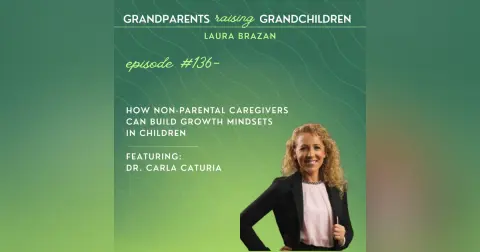
How Non-Parental Caregivers Can Build Growth Mindsets in Children



Key Takeaways
- Non-parental caregivers must regulate their own emotions and survival anxiety before attempting to shape or calm a child's behavior.
- Dr. Carla Caturia's RISE framework stands for resiliency, identity, self-confidence, and emotional intelligence, providing a structured approach to help trauma-impacted youth thrive.
- Instead of just offering empty praise or pushing harder after a failure, caregivers should teach children to use the 5 C's to challenge negative self-talk and build their own evidence of success.
- Encouraging true autonomy by letting children face natural, low-stakes consequences is essential for breaking the success-without-self trap and preparing them for independence.
Are you a grandparent watching your grandchild spiral after a bad grade, wondering how to lift the heaviness of trauma without passing on your own survival anxieties? Do you recognize yourself in the urge to fix, micromanage, or praise only perfect outcomes—while quietly wishing for deeper connection and resilience in your home?
I’m Laura Brazan, and I know what it’s like to see a child caught between perfectionism and complete shutdown, especially in kinship care. The old rules—pushing harder, rewarding only achievements, and bottling up our struggles—don’t build true strength. They create hypervigilance and reinforce a belief that worth equals performance.
That’s why, on this episode of 'Grandparents Raising Grandchildren: Through Adversity,' we welcome Dr. Carla Caturia, elite mental performance coach, mother, and creator of the RISE Framework. Drawing from over 20 years of experience guiding families through trauma and growth, Dr. Carla shares practical insights for breaking the “success without self” trap our systems unknowingly enforce. She explores how to praise effort over outcome, help our children build identity and autonomy, and—most importantly—regulate our own emotions before trying to shape theirs.
You’ll learn actionable tools like the 5 C’s for challenging negative self-talk and how to model vulnerability, growth mindset, and healthy boundaries at home. Dr. Carla shows that by validating feelings and encouraging authentic effort, we can nurture self-worth and emotional safety—regardless of what’s on the report card.
Join our community of grandparents rewriting family legacies, one healing, growth-minded conversation at a time. Your voice and story deserve to be heard. Together, we’ll transform adversity into strength, for ourselves and the children we love.
New! Grandparents Raising Grandchildren Online Support Circle! Starting Wednesday, October 7th, we meet every other Wednesday from 12:30 PM to 2:00 PM Eastern.
A peer-first, confidential space—free from cross-talk, judgment, or unsolicited advice. Guided by certified therapists, specialized family coaches, and counselors who truly understand kinship care.
When we look at the child welfare system today, it’s clear that the framework we've inherited is completely outdated. We keep trying to "fix" programs, but what if the problem isn't just funding or execution? What if the problem is how we frame the issues in the first place?
Ali Caliendo, founder of the Kinship Policy Lab, reminded us that the questions we ask determine the policies we write, the data we collect, and the outcomes we pursue.
I want to know how you’re doing. Is the podcast giving you what you need? What support are you missing most right now? Send me a Direct Message on Facebook or Instagram or email me directly at laurabrazan@grandparents-raising-grandchildren.org. I read and reply to every message because this community is built on supporting each other!
Thank you for tuning into today's episode. It's been a journey of shared stories, insights, and invaluable advice from the heart of a community that knows the beauty and challenges of raising grandchildren. Your presence and engagement mean the world to us and to grandparents everywhere stepping up in ways they never imagined.
Remember, you're not alone on this journey. For more resources, support, and stories, visit our website and follow us on our social media channels. If today's episode moved you, consider sharing it with someone who might find comfort and connection in our shared experiences.
We look forward to bringing more stories and expert advice your way next week. Until then, take care of yourselves and each other.
Want to be a guest on Grandparents Raising Grandchildren: Nurturing Through Adversity? Send Laura Brazan a message on PodMatch, here: https://www.podmatch.com/hostdetailpreview/grg
Liked this episode? Share it and tag us on Facebook @GrandparentsRaisingGrandchilden
Love the show? Leave a review and let us know!
CONNECT WITH US: Website | Facebook
"We are more than a " - Laura Brazan
Frequently Asked Questions
What is the RISE Framework for children?
Created by Dr. Carla Caturia, the RISE Framework stands for resiliency, identity, self-confidence, and emotional intelligence. It helps children who have experienced trauma move past emotional roadblocks and step into a more empowered identity.
How can grandparents help grandchildren build a growth mindset?
Grandparents can help by moving away from rigid, high-pressure phrases and instead teaching children to catch, examine, and challenge their own negative thoughts using structured tools like the 5 C's.
What are early warning signs that high achievement is a distress signal in kids?
Early warning signs include extreme perfectionism, a fear of making decisions without adult input, constant overthinking, or complete emotional shutdown despite getting straight A's.
Why is emotional regulation important for kinship caregivers?
Caregivers often carry their own survival anxieties and systematic stress. By regulating themselves first through movement, mindfulness, or grounding, they prevent transferring that pressure onto children who are already dealing with trauma.
00:00 - Introduction to the podcast
06:03 - Emotional intelligence in schools
08:50 - Kids discussing school stress and emotions
16:28 - Changing self-perception with the 5 C's
17:54 - Encouraging self-reflection and evidence-building
22:38 - Helping families with personal growth
26:50 - Building Open, Trusting Relationships
28:21 - Encouraging autonomy in children
32:37 - Modeling Vulnerability for Kids
33:59 - Praising effort over results
37:32 - Promoting a growth mindset at home
Introduction to the podcast
SPEAKER_02We see these kids coming into our homes, either trying to be absolute perfectionists to prove their worth or completely shutting down because the trauma is just too heavy. But here's the raw truth. Our school systems were built for metrics, not emotional regulation. So if we don't teach them how to decouple their self-worth from their performance, we are handing them a recipe for a total breakdown. Today we're joined by Dr. Carla Katuria, an elite mental performance coach, creator of the Rise Framework, and a veteran educator with over 20 years of experience coaching more than 10,000 students and families. Join us as Dr. Carla breaks down how to decouple self-worth from external performance, build deep emotional regulation, and hand our youth the internal ownership they need to thrive. Welcome to Grandparents Raising Grandchildren, Nurturing Through Adversity. In this podcast, we will delve deep into the challenges and triumphs of grandparents raising grandchildren. As we navigate the complexities of legal, financial, and emotional support, I invite you to join us on a journey of exploring thoughts, feelings, and beliefs surrounding this growing segment of our society. Drawing from real stories and expert advice, we will explore the nuances of child rearing for children who have experienced trauma and offer valuable resources to guide you through the intricate journey of kinship care. We'll discuss how we can change the course of history by rewriting our grandchildren's future, all within a supportive community that understands the unique joys and struggles. This podcast was made especially for you. Welcome to a community where your voice is heard, your experiences are valued, and your journey is honored. I've stood in my kitchen staring across at my grandkids, watching them spiral over a single bad grade or a lost homework assignment. In those quiet high-stakes moments, all the rigid, high-pressure phrases I was raised on start bubbling up inside of me. I feel that urge to step in, micromanage, and fix it just to keep the household from collapsing. But when our kids are carrying trauma, pushing harder doesn't build resilience. It just builds hypervigilance. Today's guest, Dr. Carla Katuria, an elite mental performance coach, creator of the Rise Framework, and veteran educator of over 20 years, joins us to break down how we shift our homes from reactive survival to growth-minded leadership. We're auditing how to praise effort over outcome, foster real autonomy, and give our children the internal safety net they so desperately need. Welcome, Dr. Carla. Thank you so much for having me. So nice to have you here. You were once that straight A student, that athlete and high performer who looked completely fine on the outside while you were carrying intense anxiety on the inside. Many of us have been there as well. In kinship families, most of our kids have gone through extreme trauma. And they either adopt that I've got to be perfect attitude, or I see a lot of people pleasing, or even the radical opposite, where they're completely down on themselves, especially because they're being raised by their grandparents or their parents are in jail, they just destroy their own self-worth on the inside. And I see it with my own children. So that's their survival mechanism to keep their whole internal world from falling apart. In your 20 years of education and coaching over 10,000 students. At what point did you realize that our society and school systems are actively conditioning kids into this success without self-trap, as you call it, expecting them to perform without ever teaching them how to regulate their emotions
Emotional intelligence in schools
SPEAKER_02on the inside?
SPEAKER_01And I don't think it's intentional. I think schools were set up for academics. And we are just in the last couple generations or so, at least one or two generations, are open to emotional intelligence. And it's coming to the forefront of the classroom. And so teachers are amazing. And some are fantastic at supporting kids emotionally, and others are the science or math or social studies teacher. And it's it's just too much. So I think I started really noticing it. You know, we try to do a lot of initiatives and try to support kids. Nothing really sticks, you know, things here and there. But I was helping kids, but I wasn't really helping them to the level of what what I really thought they needed. So that's why I, you know, towards the middle to end of my career that I really started to um dig into this and support families at a deeper level. Um and, you know, because you see a lot of kids, like you said, super successful, but there's so much going on behind the scenes and underneath it all that, you know, those patterns have to be shifted or those patterns will be their patterns for the rest of their life.
SPEAKER_02What percentage of those kids that you've worked with uh have been trauma impacted?
SPEAKER_01I mean, I guess it it's all about your definition. I mean, some severely, you know, and in South Florida, there's human trafficking, there's these major uh, you know, situations that are occurring. And then there's hurt feelings and being left out and things that we don't think of as trauma. Um, so I think everyone to some extent, and I speaking from my own point of view, it took me a while to tell my story because I did not grow up in a terrible family. I have and had a very nice life. Yet that doesn't mean I still don't have emotional concerns underneath it all. So I think also part of what you shared was like, well, why did you do what you do? And it's for
Kids discussing school stress and emotions
SPEAKER_01the kids that, you know, aren't getting as much support, even though they might seem like they don't need it. I think everybody's got something that they're carrying. And my goal for me personally is to help them unload as much of that as they possibly can so that they can live freer.
SPEAKER_02And I think really in the last 25 years, maybe people just talk less about their feelings and emotions and you know, talking about sex, talking about how they feel about their friendships and who they are is just it's it's become more difficult rather than I think easier to talk about those things.
SPEAKER_01Yeah, like a lot of kids when I start working with them, it's very easy for them to talk about, you know, school and grades and this test was stressful and you know, all the surface level things, which is thank you for sharing. Um, but it gets a little bit uncomfortable for them or challenging because it's not something they've done before. They've, you know, well, what were you thinking when that happened? And how did it make you feel? And how did you want to communicate this to another person and boundaries and all of the things? So um I think it's valuable, but yeah, it it's a new skill. You know, it's just I overthink. Well, you don't have to overthink all the time. We can work through that, you know? So yeah, it is it is tough for people. Um that's something that's easy. So we could just go up, put the TV on or go on the phone because like uh we don't want to sit with it. Play a video game. Yeah, I mean, I'm and I'm guilty, you know, of course, you know, it's so it's a challenge and I applaud people for sitting with it. You have to sit with yourself.
SPEAKER_02That's a great point. Yeah, and um much needed work that you're doing. Why don't you tell us about the Rise framework?
SPEAKER_01Yeah, yeah. I named my business, the House of Rise, with the intention of, you know, like rising up to the next level for for kids, but also it stands for resiliency, identity, self-confidence, and emotional intelligence. So I think when I work with kids, if there's any emotional issues that are getting in the way, like anger or frustration, you know, they're shutting down. We go, we work through that first, get to a semi-balanced state. And then from there, they start to realize, you know, okay, I I am resilient, I can do hard things, I've done this before, I can do it again, build my confidence. And then, you know, there's a lot more to it than just these few things. But then they start to step into that next identity and you know, they see themselves as the new them. And then they start to actually take those actions and act as if they were. And that's kind of what we work through, and then shifting different parts of themselves so that they essentially become a more empowered, powerful individual.
SPEAKER_02I love that. I think because especially we're dealing with these kids that don't fit normal standards. So helping them take a new framework and see themselves in a different way when they're struggling with something is a really great way to present this information to them.
SPEAKER_01And it's sometimes hard to look outside of yourself. You're in your house and your neighborhood and your room, you know, your school, and it's like nobody understands. And I think step one is just listening and and hearing kids. You know, they just they want to be understood and they want to be heard. Just starting there gives them that kind of like platform to, you know, build that stronger relationship and have that open communication.
SPEAKER_02So something I thought about before we were going to do this interview was that oftentimes our own systematic stress and our survival anxiety transfer onto these kids. How can we help kinship caregivers foster just better strategies to motivate kids rather than the high pressure motivated techniques that we were raised on? I mean, you know, I don't have to tell you the phrases that come back to me when I'm concerned that that my kids don't care about doing their homework or that they've performed badly on a test, you know, all the old words come back to me. And I have to re-regulate myself. How how can you help us? I know these programs are for the kids, but what do you have for us grandparents to help us do better?
SPEAKER_01Well, you you kind of answered some of what I was gonna say, which because you're so awesome at what you do. But this the first step I would say was regulating yourself. So you could hear the bad news, the the poor grade, the car got totaled, you know, whatever, whatever the situation is that is gonna throw you over the edge. It's all about being proactive with yourself. And, you know, movement is part of your day. Maybe it's meditation or it's yoga or it's you know, you have to do the things that keep you grounded and healthy. I see it all the time with moms. And it's so it could be grandmas or grandpas, doesn't matter who the caretaker is, putting everyone else before themselves. So though that is fantastic and my mom did it, we love her to death. What are you doing for you? Because you need to re-regulate it in order to be there for everyone else. That's the first step.
SPEAKER_02I get I get that. I talk about that a lot to parents because I need to hear it myself all the time. I'm thinking about a particular situation where we have a child and we know they're not processing something well. Either it's rejection at school or it's um reacting to bad grades or whatever it is. Is there can we start at square one and say, I feel like um you're struggling with this? Let's get back to this framework. I know I do really well when I have something visual that I can look at and say, let's run through this step by step. Do you do you have a technique that you do when you're working with a child that's struggling with a particular issue, you know, a standard process that you use with them?
SPEAKER_01Yeah. So I mean, I guess it would depend upon the situation, but I'm always running through the questions with them of like, okay, what's coming up for them? Um, what is the story you're telling yourself about this? And I won't maybe come out and say that, but I try to get to the bottom of they keep saying this person's annoying or, you know, whatever the thing that keeps coming up. I hate math, you know, you name it. For the caregiver, it's seeing them in that different identity instead of saying just encouraging and saying, no, you're good at math. Like they they they just got an F. Like they don't feel like they're good at math. Right. So though that though that might feel like you're helping, you're not hurting, but you're not, it's not, you know, doing anything. So
Changing self-perception with the 5 C's
SPEAKER_01you really have to see help them to see themselves in that next identity that you're seeing them in. So you see them doing well in math or getting the spot in the play or, you know, whatever thing that they're really frustrated about and they can't, they can't seem to get past, but they have to see it for themselves. So it's helping to remove that resistance. So first having them kind of, you know, challenge their thoughts about themselves. I use something called the five C's. So, like first, they're challenging what they are even thinking. Because I think I can get into the whole thing and I will, but I think the first, the the hardest thing for many people is to realize their thoughts are creating their feelings and their behaviors. Because a lot of times we just think this is how I am. And yes, this is how you've been, but do you have to continue to be this way? So it's first like, what were they thinking? Were they thinking something poorly about themselves? Were they thinking about their environment, their situation, other people? Um, and it's really catching those thoughts and then challenging those thoughts.
SPEAKER_02Like, say you've got a kid who goes, I'm I'm really stupid. I think I'm so stupid. I hate myself because I'm stupid. And then you go, you go, Well, I know you did really well, you know, when you did that project last week and you got an A on that. And um, so I know you're not really stupid. What brought that thought about? That's what you're saying.
SPEAKER_01Yeah. So you're basically like you said, like, well, who told you that? Or, you know, what what brought that thought up? Well, and then they say, Well,
Encouraging self-reflection and evidence-building
SPEAKER_01look at this grade, or, you know, okay. And so what you said earlier too is so once you're asking the question of, you know, where did this come from? You know, this thought, then it's what you just said is building the evidence. Well, okay, maybe today you did get a 60 on that math test. And then maybe you go back, well, wait a minute, what I remember last week, what were what did you do in science? Oh, well, I did, I got a on a project. And then what did you you're building? So you're maybe not telling them how good they are. You want them to build the evidence for their own case against that thought. So if they build the evidence for the positive thought versus the negative thought to just make it simpler, then they start to rewire their brain. But we want to get them to think about how good they are more often than how bad they are. And the more we can think how good we are, or how powerful, or how confident, or you, you know, you fill in the blank, beautiful, then we start to starve that other thought.
SPEAKER_02It totally changes our perspective. And it's always amazing to me, you know, like if you have a bad day and then something happens and it totally changes it, and you go, wow, I'm having a great day, like you asked me today when you got on. I said, How are you doing? I'm doing great. Well, I wasn't doing so great a while ago, but something happened that changed my perspective. We need to show them how that works. That's why you have kids that get so consumed by depression that they commit suicide. And I often say, you know, if they'd just gotten a little beyond that, maybe that's not a thought that would have passed their mind.
SPEAKER_01Yeah. Yeah. I mean, I think a lot of kids, like I was working with someone when he's starting, he's like, I don't, I don't do positive thinking. You know, that was kind of like our first, our first conversation. I was like, yeah, I get it. You know, I get it. You know, it's not you, you think it doesn't work. And so it's it's kind of getting them to realize that it does work, that you're not going to believe it the first time we tell you it or the first time we go through this process. But you have to allow them to borrow the belief from you. And then little by little, you are then getting them to believe in themselves.
SPEAKER_02Yeah, I love that. That's great. Isn't it amazing? Really, these are very simple concepts. And yet I just don't understand why we don't hear more emphasis on that in our schools and why we don't get more training in this before we get these kids. Because um my gosh, most of us get the kids overnight and there's nobody there to help us remember these basic tools. Um, yeah, yeah.
SPEAKER_01I mean, I think um it it's really all about mindset. It's having that growth mindset. Um and being mindset. Yeah. Yep, yep. So the the fixed is, you know, like I'll I'll I'll always be this way, or you know, this doesn't work, nothing ever changes. You know, how many times do we recycle those thoughts in our head? Thousands of times a day. I still do it to this day, even though I am pretty good at the the the mindset stuff. It still pops out.
SPEAKER_02It's part of the human condition.
SPEAKER_01Correct. And um, I think, you know, this isn't new, but it is fairly new. And, you know, many schools, there's new alternative schools out there that are doing a lot of different things, but the traditional school, that's just that's not the societal mindset. And it's new.
SPEAKER_02I was just thinking about I was just thinking about that word growth, that you know, instead of positive thinking, it's growth thinking. And I was thinking I would put on our refrigerator, which is where we have the five C's, by the way. That's been very effective for our family. The sign that says we are a growth-minded family. So is your perspective right now growth-minded? Let's just check in with that. Instead of telling them to do that, yeah. Yeah, and then I think that they'll family buy into that, you know, go, hey, let's remember. Yeah.
SPEAKER_01And it's it's like you just said, it's the alerting them in the moment. If the energy is right, sometimes, you know, it's a meltdown. We're not gonna say, hey, is that a growth? You know, but in in in a typical, like, you know, less than powerful statement is said out loud, you can cue them in. And and that's helping them learn their patterns, exactly what you're doing. You know, like is that a growth thought? Oh no, that wasn't, that wasn't a growth thought. Okay, how can we replace that? What what thought would be, you know.
SPEAKER_02So what's the opposite of a growth mindset? How would you phrase it? Fixed. Fixed. Mm-hmm.
SPEAKER_01But I like what you said. And I don't love to use positive and negative, I just sometimes for explanation reasons, it seems simple. Commonly how it's been referred to. Correct, correct. Um, but yeah, I think, you know, growth, if if we're not growing, we're dying.
Helping families with personal growth
SPEAKER_01So uh if I'm working with a family and I'm meeting them where they're at, if they've been doing a lot of work on themselves already, fantastic. Let's let's fly. If this is new for them, you know, we might need to take a few steps back and, you know, do some definitions and kind of you know, give them a little bit more information. And that's fair. The point is, is that um that they've left with a different, better, more gross-minded perspective than when they came in.
SPEAKER_02Yeah, I love it. Yeah, I love it. Yeah, yeah. In your two decades in education, you've seen schools double down on standardized testing and rigid performance metrics while completely stripping out just fundamental emotional survival skills like the ones we're talking about. How can we as parents advocate for change in this area?
SPEAKER_01Yeah, um, it can be difficult. Um, these I I don't think standardized testing is going away unless you choose a different route. And so what I've seen a lot of parents, I have a lot of families that are homeschooled, do online school, go to different schools other than the traditional public school, whether it's private or some other kind of situation. So I've I've found that oftentimes it's the path of least resistance versus fighting, fighting and fighting.
SPEAKER_02But I think sometimes it is the right way.
SPEAKER_01Sometimes it is. And I also think there's a lot of great programs and support systems out there that parents, grandparents can access. It could be after school program, it could be, you know, all different, you know, on the on the weekends or summer camps or things like that. So um the testing is not gonna go away if you're in the the typical school. Um it it does have a level of value, it is a metric, it does tell you where you're at, you know. So there are the positives of it. It's just when it when it was twice a year, you know, okay, fair enough. But once you get to high school, 40% of your curriculum is testing and 60% of the 10% is actually learning it, you know. So I think it's out of balance. I think it has its value, but I think it's out of balance for sure.
SPEAKER_02Yeah, I think we'd all agree with that. So we often hear parents say, My child's doing great. They get straight A's and they don't cause any trouble, only for that child to suffer some kind of a serious mental breakdown later on. From your experience in working with over 10,000 students, can you tell us what maybe some of the early warning signs are that a child's high achievement is actually a distress signal?
SPEAKER_01Yeah, I think um, I think, and it's funny because many of the parents I recently worked with aren't putting the pressure on their kids as much. They have a schedule, they have their activity. You know, you have to be in an activity after school, you know, that the regular expectations uh for a healthy kid. But I think a lot of the kids are putting a lot of the pressure on themselves to please, or it's perfectionism where they either just overthinking and they're redoing. And then a lot of times parents may not realize it. There's a comparison, siblings or your friend, or this and that. But I think it comes out when kids in a couple different ways. It could just be that high level of anxiety. Um, it could be the the paralysis of, you know, they don't want to make the wrong decision. So they're not able to make any decision without someone else. Um Yeah, I see that a lot. Yep. It could be like the shutdown of, you know, like they've already been overwhelmed and now they've spiraled and it's just it's shut down. Um, or the the opposite, which is like the overdoing of 25 million activities and, you know, every everything. Um, so I think grades are a great indicator of success to some extent. But we have to look at the whole child. If they're completely dysregulated or withdrawn or breaking down, and even if you're not seeing that full on, but you've noticed some like that that feels off, you know, like you know, and then I think it's your gut. Trust your gut. And I think, you know, it's a having an open, um, kind of an open relationship with them
Building Open, Trusting Relationships
SPEAKER_01where very non-judgmental and just validating their emotions when they do share them with you because they're not gonna share with you. And they're not gonna share if you're just like, uh, it'll it'll go away or it'll pass, or no, no, like it has to be, wow, that must have been really tough for you, what that decision. Or I can see you you feel you seem pretty upset right now. I'm sorry that that was you had a rough day. You what whatever it might be, but really seeing them and hearing them, then they will open up to you. But if you're not seeing them, you're not hearing them, and you're just kind of shutting it down, yeah, you're gonna miss all the signs.
SPEAKER_02So uh you just made me think of a great question because of course I thought of myself and my kids. Um oftentimes because because I have to be so efficient, I can micromanage my grandkids and my family at times. One of the difficult things is is helping them build better self-trust and ownership basically of their behavior without punishing them in order to do it. Um, I mean, I do believe that consequences are important and letting them create their own consequences. But how can we specifically help them build better self-trust or believe that they are doing it themselves rather than tell them what to do?
SPEAKER_01Yeah, autonomy. So autonomy. Yeah, autonomy. I think um you have to pick and choose depending on their age
Encouraging autonomy in children
SPEAKER_01and, you know, the expectations you have for them. I mean, 11-year-old's gonna have a lot of different level of independence than a 16-year-old. But I think with that being said, you have to be very intentional about letting them feel natural consequences, not always rescuing them or fixing it for them. Um, you know, if they're in middle school, you're gonna help them self-advocate with the teacher and you're gonna support them and you're gonna let them fail, or you're gonna let them, you know, do something it with their friend that I don't know, wasn't so nice. And then like that's the the learning period. Because when they get to high school and then they get to college, they have to, you know, that's the time that they should be taking on more autonomy. So if you're not starting with them early, then they're gonna go to college and be looking for you to fix everything for them. So I think it starts with like behaviorally letting things fall through the cracks that can fall through the clack cracks. You know, you kind of have to choose what you're okay with as a parent of letting them fail at.
SPEAKER_02I like that. Yeah.
SPEAKER_01Yeah. And I think that's different for everyone, but the Graves thing is an easy one to give an example for because they get an F in middle school, they're pretty much gonna continue to be in middle school. But if they start getting F's in high school and then lose credit, then you have to go to summer school, then you're behind, you know, and then it's a whole cycle. But if they're not learning that in middle school, they're gonna go to high school and have a rude awakening and not be able to play sports and not have the GPA, and I've seen it over and over again.
SPEAKER_02That's a very good point. Explaining to them that this happened now, but here's the picture. In a few more years, you're gonna have to be responsible for what you do when it comes to homework and when it comes to studying. You know, my granddaughter said to me the other day, fourth grade is so much harder than third grade. She said, Every year is it gonna get harder? And I said, Well, yeah, kinda. And that's why we're trying to get you into good homework habits because you're really gonna need them when it comes to high school.
SPEAKER_01And I think you're doing both the things when uh some parents are doing the telling part. It's gonna be hard, you're gonna need this, but they're not doing the doing part. So you have to tell them why you're doing things and it, but then also you have to let them do it, or they're not gonna, you know, if you don't let them do laundry, they're never gonna learn how to do it. That's a small thing, but you can't say you're gonna need to know how to do laundry and now and then just do it for them.
SPEAKER_02Or you can say, I saw that you didn't put your clothes away after school. And I you do know that you need to pick up your room before you go out and play. I mean, that's just one of the things that we have as a semi-standard rule. But she hadn't done it the other day. And I said, Well, you know, you got away with it this time, but here's the deal. This is what's gonna happen. If it happens more often, you know. I mean, that's sort of a a simple example.
SPEAKER_01Moving forward, you're you know, then you're not gonna be able to go out for the next week or the next couple days or whatever, you know, or yeah. And do you you know, do you letting them make choices is big? Yes, absolutely. So if you've given me a couple things you want for your birthday on this list, and it's a lot of clothes I see here, and I have noticed that you haven't been folding and washing your clothes. So if you want the reward or the I don't know, the nice new clothes that you're looking for, I need to see it in your behavior and show me that you're gonna take care of it.
SPEAKER_02Yeah, I really like that because we can tend to gift give, and then we get upset when they don't care for the things that we give them. So if we say, I get that you love dolls, you know, but I find your dolls all over the place. They're under the bed, they're all over the place, and I don't see that you're taking care of what I've already given you. So I I like that. I like that idea.
SPEAKER_00Yeah. Yeah.
SPEAKER_02Well, I have three questions that I ask all my interviewees, and I I looked at my taboo question for you, and I realized we probably already answered this, but I need your answer because I need to put it in my book. Um, to change our family's legacies, we have to shift from reactive survival to intentional leadership. How do we process our own unresolved trauma so we can create a home that's rooted in healing rather than fear?
SPEAKER_01Um, I think from a grandparent or parent point of view, I think doing the work yourself, having your own support, but
Modeling Vulnerability for Kids
SPEAKER_01I also think sharing and being vulnerable with the the kids, the teens, tweens that you're taking care of. So I think as a family, you don't have to share all the things with the kids, but you can share that you had a rough day and this is what happened at work and this is how I overcame it. You know, it's it's all about modeling for them because they're watching your every move. It's, hey, look at me. You know, I'm eating dinner and my phone's in the other room. Cause at dinner, you know, we talk to each other and we have, you know, 45 minutes of together time. That modeling, it's not bringing the phone to the table. Or, you know, so I think you have to share the vulnerability in your stories that you're telling them, but also model for them.
SPEAKER_02It's so hard to do the do what I say and not what I do, right?
unknownYeah.
SPEAKER_02Yep. Um, yeah. Actually, that was the taboo question I had for you, the systematic question I had for you, which we've also already answered. Um state agencies and schools measure our kids solely by report cards, report stats, and compliance, they're erasing, as we know, a child's humanity. So, how do we teach our grandchildren that these are important benchmarks on the one hand, but that their internal safety and their self-worth come first?
SPEAKER_01I think it comes with us congratulating them, of course, when they get a good grade or get, you know, great job, but
Praising effort over results
SPEAKER_01it's going beyond the great job because if they're getting great job when they succeed, what are they getting when it doesn't go their way? Or when there's some other accomplishment that they've made internally. You know, so I think it's kind of um praising them on their effort, whether they got the grade or not. I saw you, you know, spend five hours this week on this project, and I know you still got to see on it, but I saw the work you put in and I rewarded them on those. Yeah, and like I'm proud of you. And, you know, what would you do differently next time? Because you didn't get the grade you wanted, but I did see the effort you put in. So it's it's really about, you know, pray I don't like to use the word praise, but it's about their effort. It's not about their outcome. So if you're if it it's just like every award, if if we could have awards ceremonies for kids that brought their grades from D's to B's or from F's to C's, not just the straight A's. So true. So true. So because there I know a lot of kids that put a lot of effort in and they're not gonna get A's and B's. There's not. Yeah. I mean, I think and some of that at the younger ages comes in the classroom when the teacher's doing like stars on the chart or things like that. And that's fine. And that's great. But then when they get to middle and high school, it's kind of like it's just if you're not getting good grades, you're lost in the shuffle.
SPEAKER_02That's right. Yes. Good point. Uh well, my policy question is if you were advising state child welfare leaders and lawmakers, what mandatory trauma-informed mental performance and emotional regulation resources would you require state agencies to provide every single kinship household the moment a placement occurs?
SPEAKER_01Yeah. I mean, I think I would give them the resources, whatever they might be, whether it's online courses or paperwork or things like that. But I think more importantly than all of that is continued support. So getting them connected with someone. It's like if you see me once and we have a session, that's nice. Well, what is that gonna do? You know? So I think it is very difficult. Like I don't know the answer, but I know if there's a way for people to get continued support. And I think people also have to be open to it. It's not gonna happen overnight. It takes months, if not years, of of time. Yeah. Um, so the the governmental way that it would work, I don't have that answer, but I do know it takes time and it takes effort and it takes energy to shift the things that we're speaking about. Um, but you know, once it's presented to people, it it needs to continue.
SPEAKER_02It can take generations to change. I've witnessed that in my life. Um, I've been an advocate in other areas and um it can take generations, but you know, um I will die trying to speak up for that kind of mental health support for all people and all families.
SPEAKER_01Absolutely. Absolutely. Wow.
SPEAKER_02Well, before we go, Dr. Carla, could you share your website and where our listeners can find you and more information about your program?
SPEAKER_01Yeah. So the best place to find me is just under my name, Dr. Carla Katuria, social media. Um, I have a YouTube page, I have a free course. So if you just look me up on, you know, Instagram or Facebook, send me a message, friend me, follow me. Tons of free resources out there for everyone. And if you want to know more, just message me.
SPEAKER_02Great. Thanks for being so open and warm to the audience. I appreciate it. Absolutely. Thank you so much for your time. This was fun. Yeah, for sure. Take an audit of your household messaging this week. When your grandchild brings home a result, whether
Promoting a growth mindset at home
SPEAKER_02it's a report card, a cleaned room, or a bad day at practice, are you praising the final grade? Or are you validating the effort behind it? Here is your boardroom challenge today. Put up a reminder on your refrigerator that says, we are a growth-minded family. I've already done this in our home. And the next time when a slip-up happens, step back, regulate your own energy first, and ask them, are we behaving like a growth-minded family? Join us next week for episode 137 as we tackle one of the most glaring legal roadblocks facing relative caregivers. I'll be joined by Amy Muchia, founder and president of the Arkansas Grandparents Raising Grands Foundation and founder of Grandparents Raising Grandchildren United for Change Nationwide, alongside Ruthie Schaufi, a grandmother raising three grandchildren. We are far too often told in family court that we aren't a party to the case and don't have a voice. But under federal law, if that child lives in your sanctuary, you have explicit rights to be heard and speak and be included in DHS and court proceedings. We're exposing systematic courtroom suppression, breaking down your actual legal rights, and fighting for policy change nationwide. The mission continues. We are 2.7 million strong, still nurturing and still here. Remember, your child's self worth is not a line item on a school district's balance sheet. And true emotional security starts when we choose growth over perfection at our own kitchen tables. So keep nurturing, keep leading, and I'll see you in the next boardroom.