The System Handed Our Addicted Grandchild Over to a Drug Hotel—Here’s How We Fought Back


Key Takeaways
- Kinship caregivers and grandparents often fill foster care roles quietly without the legal protection, recognition, or financial support of licensed foster parents.
- Keith Lowhorn transitioned his crisis management skills from national newsrooms to founding a statewide kinship organization and chairing the Federal Advisory Council on Grandparent Caregiving.
- Advocating for grandfamilies involves fighting to ensure that critical resources, including historic opioid settlement funds, directly reach grandparents for basic needs like food, clothing, and medical care.
- Peer connection and community support are foundational in helping kinship caregivers move from a state of isolated survival to powerful collective advocacy.
- Policy reforms like the SGRG Act aim to provide essential relief, such as funded respite care, for aging caregivers who carry the heavy emotional and physical tolls of second-time parenting.
kinship care advocacy. In this empowering episode, we invite you into a journey that so many grandparents and kinship caregivers know all too well: stepping up without warning, overcoming system barriers, and ultimately forging real change from the kitchen table all the way to the policy boardroom. Together, we unpack the hidden realities of kin-based “foster care,” shift our focus toward demanding equitable resources, and explore how sharing our lived experience becomes the foundation for wide-reaching policy reform. You’ll hear how turning from quiet survival into visible advocacy is reshaping what is possible for grandfamilies everywhere.
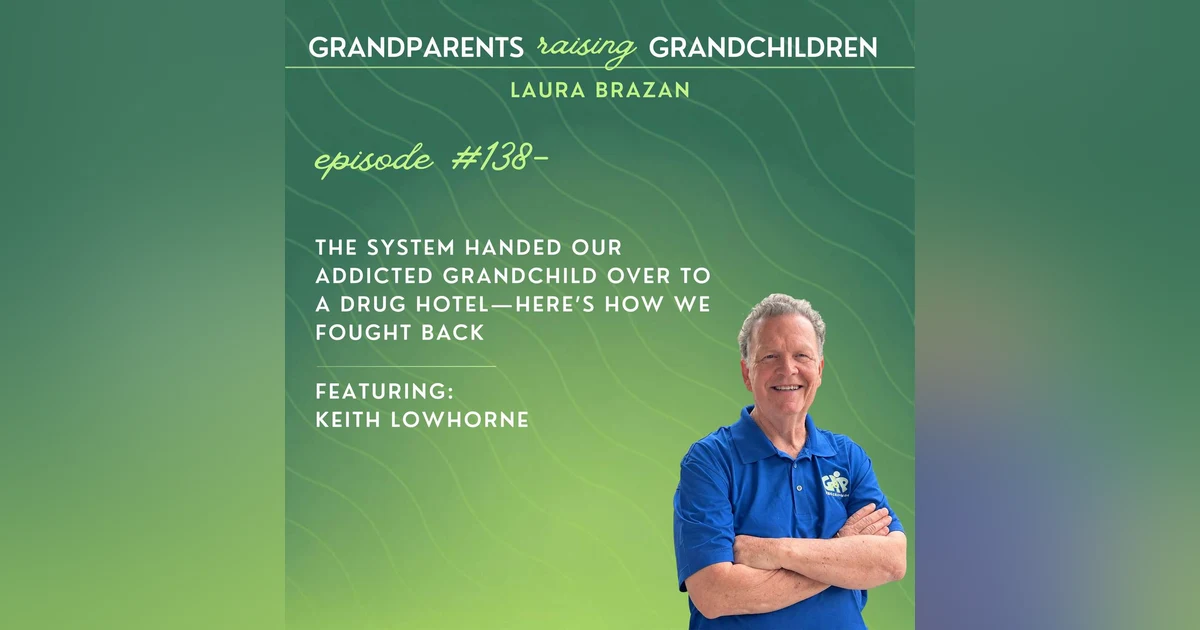
Keith Lowhorn built a distinguished career managing national newsrooms and leading during breaking crises, only to discover his greatest challenge—and legacy—would be raising two grandchildren born substance-exposed. He and his wife, Edie, transformed their family’s struggle into an engine for community support, founding a statewide kinship organization that advocates at both the state and federal level. Keith now chairs the Federal Advisory Council on grandparent caregiving, where he speaks boldly for grandparents on the front lines and has championed direct support for kinship families, including securing portions of historic opioid settlement funds.
Connect & Resources
- Grandparents As Parents / Alabama Kinship Support (organization referenced)
- Federal Advisory Council on Grandparents Raising Grandchildren (as leadership chair)
- Further information on kinship policies and acts mentioned can be found at acl.gov (for the SGRG Act)
Key Episode Highlights
- Unmasking Hidden Foster Care: Examine how millions of grandparents, kin, and “fictive kin” (those not biologically related but stepping up nonetheless) fill key foster care roles quietly, often with less recognition, support, or legal protection than licensed foster parents. Hear about the emotional and practical impact of being sidelined in legal decisions—even when family is the best option 04:09.
- Exposing System Barriers & Advocating for Equity: Keith and his family’s experience highlights gaps in legal, medical, and economic support. Explore stories of exhausting court battles, the true costs of adoption, limited access to respite care, and why meaningful policy must equate kin caregivers with traditional foster parents in funding and services 18:50, 32:30, 33:19.
- Mobilizing for Upstream Change: Discover how ordinary grandparents move from isolation to community power—organizing locally, testifying at state commissions, and holding government accountable for the use of opioid settlement funds and new kinship legislation. Keith lifts up the need for a National Kinship Bill of Rights, equitable distribution of relief money, and trauma-informed policy-making at all levels 27:23, 44:04.
- Building Authentic Community: Learn the importance of peer connection—how sharing stories, offering a listening ear, and training “caregiver advocates” creates a self-sustaining network that both supports individuals and drives collective action 42:03.
Community Call to Action
Every grandfamily and kin caregiver is part of a larger story. This week, reflect on one resource or boundary you need—be it legal aid, respite care, or clarity on your rights—and commit to asking for it in writing. Share your journey with a fellow caregiver or in our online community. Consider reaching out to your local policymakers to demand real support for grandparents and kin families. Remember: advocacy grows from the boardroom but starts at the kitchen table. Your voice and leadership are invaluable—let’s honor it, together.
New! Grandparents Raising Grandchildren Online Support Circle! Starting Wednesday, October 7th, we meet every other Wednesday from 12:30 PM to 2:00 PM Eastern.
A peer-first, confidential space—free from cross-talk, judgment, or unsolicited advice. Guided by certified therapists, specialized family coaches, and counselors who truly understand kinship care.
This listener shares how happy she and her husband were to find our show. Theyre parenting for the second time around and listneing to the epsiodes all the way through. Thanks for sharing your stories! There is always someone who needs to hear.http://www.grgpodcast.org
I want to know how you’re doing. Is the podcast giving you what you need? What support are you missing most right now? Send me a Direct Message on Facebook or Instagram or email me directly at laurabrazan@grandparents-raising-grandchildren.org. I read and reply to every message because this community is built on supporting each other!
Thank you for tuning into today's episode. It's been a journey of shared stories, insights, and invaluable advice from the heart of a community that knows the beauty and challenges of raising grandchildren. Your presence and engagement mean the world to us and to grandparents everywhere stepping up in ways they never imagined.
Remember, you're not alone on this journey. For more resources, support, and stories, visit our website and follow us on our social media channels. If today's episode moved you, consider sharing it with someone who might find comfort and connection in our shared experiences.
We look forward to bringing more stories and expert advice your way next week. Until then, take care of yourselves and each other.
Want to be a guest on Grandparents Raising Grandchildren: Nurturing Through Adversity? Send Laura Brazan a message on PodMatch, here: https://www.podmatch.com/hostdetailpreview/grg
Liked this episode? Share it and tag us on Facebook @GrandparentsRaisingGrandchilden
Love the show? Leave a review and let us know!
CONNECT WITH US: Website | Facebook
"We are more than a " - Laura Brazan
Frequently Asked Questions
Who is Keith Lowhorn?
Keith Lowhorn is a former newsroom manager and kinship caregiver who raises two substance-exposed grandchildren with his wife, Edie. He serves as the chair of the Federal Advisory Council on Grandparents Raising Grandchildren and advocates for equitable resources for kin families.
What are opioid settlement funds used for in kinship care?
In supportive states like Alabama, a portion of opioid settlement funds is directed to area aging agencies to provide direct financial relief to grandparents and kinship caregivers, helping cover basic essentials like diapers, formula, utilities, and tutoring.
What is the role of the Federal Advisory Council on Grandparents Raising Grandchildren?
The council advises federal agencies on the needs of grandparent and kinship caregivers, championing direct support, policy reform, and improved access to critical resources like respite care and legal assistance.
Why is respite care important for grandparents raising grandchildren?
Older adults raising traumatized children often experience exhaustion and physical strain, making funded respite care essential to give caregivers a necessary break while ensuring children are safely supervised.
00:00 - Challenges of grandparents raising grandchildren
08:03 - Caring for Kyron during hard times
14:00 - Talking about daughter's birthday
16:58 - Harper's touching story with politicians
20:08 - Becoming a dad at 60
23:01 - Funding for opioid commission test site
26:17 - Opioid settlement fund allocation
29:36 - Opioid settlement and grandparents' role
34:16 - Balancing family and personal insights
37:41 - Education and the McKinney-Vento Act
41:11 - Support for kinship caregivers
41:59 - Addressing kinship caregiver challenges
47:51 - Challenges of Supporting Grandchildren
49:10 - Promoting kinship support in Congress
52:35 - Legal battles for kin caregivers
Challenges of grandparents raising grandchildren
SPEAKER_02
We walked into that neonatal intensive care unit and saw infants suffering from prenatal exposure, babies needing total care, and the state turned around and handed our newborn grandchild back to biological parents living in an abandoned car, said Keith Lohorn. In that moment, he said, We knew the system wasn't broken by accident. It was failing by design. But when 2.7 million grandparents step up to save these children, we save taxpayers over $10 billion every single year. It's time we demand the seat at the table we've earned. Keith Lohorn and his wife are raising two grandchildren. Here's how they turned their tragedy into an organization that is helping thousands of grandparents and changing laws for kinship care. In this podcast, we will delve deep into the challenges and triumphs of grandparents raising grandchildren. As we navigate the complexities of legal, financial, and emotional support, I invite you to join us on a journey of exploring thoughts, feelings, and beliefs surrounding this growing segment of our society. Drawing from real stories and expert advice, we will explore the nuances of child rearing for children who have experienced trauma and offer valuable resources to guide you through the intricate journey of kinship care. We'll discuss how we can change the course of history by rewriting our grandchildren's future all within a supportive community that understands the unique joys and struggles. This podcast was made especially for you. Welcome to a community where your voice is heard, your experiences are valued, and your journey is honored. You're trying to figure out how to be a parent all over again in a body that's older and tired while protecting children who carry silent trauma in their hearts. Today's guest spent four decades managing high-stakes newsrooms, multimillion dollar budgets, and national crisis coverage. But when he and his wife Edie took custody of two newborn grandchildren, born addicted to substances, he realized that no newsroom crisis could compare to the emergency inside his own home. Keith Lohorn took those exact newsroom logistics and transformed his family's emergency into community infrastructure. Standing before state commissions and chairing the Federal Advisory Council to support grandparents raising grandchildren. Here is how we move from survival mode to strategic power. Keith, your wife Edie, walked out of the hospital with two infants suffering from drug exposure right after leaving the workforce. And you all were dealing with medical crises, court papers, and endless appointments, which we know happens when we get these children who've suffered trauma. How did that affect your home? And with your background in the newsroom, what what were some of those tools that you used, that you and Edie used to handle all of that mountain of paperwork and manage those medical needs and keep your own health from falling apart?
SPEAKER_01
It was difficult. Now, you know, we it started uh actually uh three years before we brought Harper home from the hospital. It started with uh uh Kyron, who's uh he'll be he'll be 13 in a f in a few months. And we were, he was in the NICU. He had uh he was born with an array of drugs. Uh the doctors tell us he had 52 different illegal drugs in his system. And it took quite a while for him to to rid his body of those drugs uh through the various things that doctors and and nurses and those folks do. I just I have the highest praises for those folks. It's just it's to to see the work that they've done and do every day, it's it's just miraculous. So we were in the hospital with Kyron and um and we were there morning, noon, and night. Uh Edie was there uh most of the time. I came uh sometimes before I went to work, and then sometimes and after I brought came to work, I after I got home from work, I would change and I would go back up there and I'd check on my mom who lived with us at that time. And uh, we were all set to bring Kyron home. The the social workers at the hospital, the nurses and doctors said yes, absolutely. Um the uh the biologicals, and I call them biologicals, I don't call them parents because you know, parents, parenting having the name parent is a right. It's not uh you earn that right. And so I call them biologicals. Um they would come to the uh um the NICU occasionally, not very often, but occasionally, and they would cause havoc, they would be high, they would be drunk, they would be whatever, and they got kicked out more times than they stayed. So we thought we were gonna bring home the babies, uh, Kyron from the hospital after his stay. The day that he was supposed to uh be released, the day he was released, uh they we were there, we had the car seat training and all the stuff that you have to do, you know, before you a child is released to you. And all of a sudden our Department of Human Resources um uh stepped in and said, nope, we think it's time for reunification. And we were astonished. Interesting. We were, I mean, it was beyond astonishing. I mean, here these parents had no place to live. They lived in a drug hotel, they lived in a in a parked abandoned car, or they lived in a in a in a park area. And the Department of Human Resources turned that child over to them. Now, honestly, honestly, it was it was shocking to us.
Caring for Kyron during hard times
SPEAKER_01
We cried, we we uh we we failed. We we knew that that not good things are not gonna happen to Kyron. But we kept Kyron most of the time. We uh, you know, uh when you're a a drugie uh and you have drug parties, a little kid, especially a baby that's born addicted, who has all sorts of issues, uh that gets in the way of uh what you're partying. And so we kept Kyron probably for those three years, we probably kept him the vast majority of that time. Uh the times that that he he did stay with the biologicals, he came back, he was um he was burned, he was abused, he was neglected, and he was afraid, and he was so so so so dirty. When we um uh when Edie Edie brought him home, because I wouldn't go because I was afraid something I would I would get upset and I would do something I shouldn't do. So when Edie brought him home, she would um she would say, just get the get the sink ready. And uh so we would put him in the sink and and just he loved to have water poured over him because he just he just loved to play in the water. And we would just pour the water over him, and it would just be black from everything. And she would have to watch him for an hour, his fingernails, all that stuff from this little baby. And um, so then Harper was Harper came along, we were uh we we didn't even know that the uh the biological was pregnant at that time, so that was a shock to us. And uh and um Edie went to the hospital.
SPEAKER_02
Same parent or different parents?
SPEAKER_01
No, same daughter.
SPEAKER_02
Were these the same parents? Yeah, same daughter, okay.
SPEAKER_01
Same parents. Even though they'd been in and out of jail this whole time, uh I don't even know if she knew she was pregnant to be honest, because there was no prenatal care. So Edie went to the hospital. I didn't. I stayed home with my mom and with Kyron. Um that was probably I look back and it's probably the hardest thing I ever did, and it's probably the saddest thing I've ever done is is to leave Edie in that hospital by herself with this little baby. But it was it was hard. I it was trauma, I was traumatized. I was traumatized by going into that NICU. And you know, get in the news business, I saw things that you know a lot of people don't see. And thank God they don't ever see it. So I thought I was prepared for that. But when it's your child and you're in that room and there's tubes and and uh needles and trying to keep babies alive and the and the and the screaming and the hollering that that that uh drug babies do, I just didn't I didn't I couldn't do it. I was I was just exhausted from that. So I didn't go. I did not go to the hospital the whole time that that Harper was in the hospital. And um and then she's gonna be able to do that.
SPEAKER_02
I think that's a trauma that many people, yeah, many people that are not raising grandchildren don't understand until we share that.
SPEAKER_01
Yeah, until you until you experience walking into a neonatal intensive care unit and it's dark, and all you hear is these, you know, you hear see lights flashing, you see these bells going off, you see people walking around the floor, not much talking going on. Everybody's just just at work. And in fact, they're trying to keep these babies alive in most cases. And until you hear that, you don't understand. And that's trauma, that's traumatic on your on yourself. And um, and I I'm guilty that I didn't go. Harper kids me about it. She did, you know, she's fine with it. Uh when um when he brought her home, uh, I met him at the door, she put her in my arms, I cried, she cried. I have not let her go since. She is my um my little angel. She's uh she's my protector. If uh I'm you know I'm old, so you know when something happens to me or I get sick or I get a bump or I get a bruise or I start bleeding for something, she's right there. She's my she calls herself my little doctor. And um, so she takes care of me. We have a wonderful, wonderful, wonderful. She will be 10 years old on Halloween. She was a Halloween baby.
Talking about daughter's birthday
SPEAKER_01
So um, we're celebrating the month of October with her on her birthday. So um wonderful. She's 10 going on, 25, and she's promised me, she's promised, made a promise that she will always live with me. She will always live in her house, which is now she should deem this, not her house, it's her house because she's gonna live in it forever, and that she's gonna take care of daddy um in whatever capacity he needs to be taken care of, which is, I mean, what more can I ask for?
SPEAKER_02
Well, these children experience true love that they've never understood until they come into a home where people are sacrificing for them, they are openly being transparent with them, they're learning true love for the first time. And our children as well uh as well have told us, and they tell us probably every week, and they've been with us for five minutes. Sorry. Okay. Um, I'm gonna keep talking and I'm gonna keep talking and we'll and hopefully we're recovering. I was saying that these children that have been with us for five years, every week, they do deep inside them know how grateful and how so there's solidarity with the parents that are raising them now, the the grandparent parents in your case and in mine. And they tell me all the time, I'm never gonna leave you. I don't ever want to go back. I don't care if my parents get it together. I mean, I say that not out of grief for the parents because what a loss for them, but how much we have the opportunity of seeing how thankful these children are for the love and the gratitude for the love, the pure love and the sacrifices that they are given through you.
SPEAKER_01
Yeah. I totally agree with that statement. Um Kyron is special needs, so he's um uh he doesn't really talk much. He he knows he knows his story and he knows how he was abused and how uh Grammy and Grandpa came and and basically kept him away from that and and has kept him safe away from that. And he knows that that we'll do anything to protect him. Lil Harper, let me tell you, she's uh she's a go-getter, she's a talker. She's already told me that she is going to take over grandparents' parents. Um she does, you know, she she can she can talk the talk. And in fact, that's right. A couple months ago, we were in a we were in a meeting.
Harper's touching story with politicians
SPEAKER_01
Um, we had some legislators and some other folks that that came into town and we had them around in our office, and we were we were just talking. And all of a sudden I feel a tug on my on my hand, and I look down and it's Harper, and she's got Kyra in tow. She's holding his hands, and they're so they're both behind me. And she turns around and she tells these politicians and bureaucrats, she says, My daddy save me. And my mama save me. And what they do for for grandparents is is is very good. There were very few dry eyes in the room at that point. And um I tell these children go ahead.
SPEAKER_02
Tell me what you're doing. No, no, you already had to do it. She now has I was going to say that these, and I think there's a little bit of a delay in our conversations. I think that's where the the overlap is. I apologize. I don't know technology. Um I tell these children that they are survivors, and if they are able to stay healthy and not follow the path that their parents have followed, that they can save so many children from so much because their witnesses and their testimonies matter to everyone.
SPEAKER_01
And there's nothing like a story coming from a child's mouth. It's full of truth, it's full of there's nothing there but the truth because that's all they know. And so they've um um Harper never knew me in when I was uh working in the TV news business, and so she never saw that side of me. So she sees she sees me uh working from you know like three o'clock in the morning to seven or eight o'clock at night uh with grandparents as parents, uh, going to the various things that I go to, and she supports me. She comes in and when she gets up in the morning, she comes in in the office and always is is cheerful with me, and we have a discussion and all that good stuff. And and then she goes about because her mom is, you know, her mom is the is is Edie. She calls us mom and dad. And it has this because okay, it was after when Harper began to talk. Um, Kyron was still calling us Grammy and Grandpa. And Harper didn't know what a Grammy and Grandpa was at that time because all she knew was mommy and daddy. And so that's what she called us, and she finally convinced her brother that no, no, they're our parents, they're our mom and our mommy and our daddy. And they're not, they're not grandpa, they're grandpa to the other grandkids, and she was naming them. And she goes, but no, she's this is my mom and dad. So Kyron started calling us mom and dad. So it's uh it's uh it's one of those things that um at 60 years old. I had we had uh we adopted them and and I had a new name put on, you know, their my name put on their birth certificate that I was a dad at 60 years
Becoming a dad at 60
SPEAKER_01
old. So I kid people I I kid people about that quite often. But uh hey, they're they're a bundle of joy. Our plans for travel is now we travel across the state. We talk to grandparents uh on the phone, in person, in our meetings, on these Zoom calls, all these various ways that we that we are able to communicate and and talk to grandparents. And uh, and it's it's become a blessing for us to be able to help in any possible way that we can, and even that little minute way that we can. And it's just I I I've determined that the whole 43 years that I was in broadcasting prepared me for what I do today. It doesn't matter. I would agree with that, Keith. Yeah, if it's on an advocacy, I can, you know, I don't I can talk to a politician just as well as I can talk to a farmer. I can talk to a national representative uh as well as I can anybody. I I'm I'm not afraid to talk with anybody. And if somebody will give me 30 seconds, I'll do my elevator speech and uh and and leave it at that. Um, because I always, always, there's nothing more important than me right right now in my life than to get the word out about grandparents who are suffering because no one is paying attention to grandparents who are raising their grandchildren.
SPEAKER_02
Speaking of all the wonderful things you do, Keith, you stood before the Alabama Opioid Commission and fought to ensure that that subtle money, settlement money didn't just sit there in bank accounts, but actually reached grandparents and you bought diapers and formula and clothes or helped grandparents buy the basic essentials with that money. Um, can you give us some background on how these funds were and are being distributed now?
SPEAKER_01
Yeah, absolutely. Um, you know, we were very fortunate that uh Alabama was one of the first, if not the first, to actually put money into the hands of grandparents. And that was when I went before the the Alabama Commission, that was one of the things I wanted to stress is that our grandparents who are in this predicament, our grandfamilies, our kinship caregivers, our fictive kin are in need. They need the they need basics. They need to be put on the same level, if not higher, than those in the foster care system. Now, I love the foster care system. I think it's all will always be a need for the foster care system. But right at this time, in this moment in time, that situation is what it is. And we need to start focusing on on all these relatives who have picked up the pieces of these children's lives and are allowing them to live a much better life than they ever came from. So that was my point in going before the commission.
Funding for opioid commission test site
SPEAKER_01
And I uh I stressed that the need was was humongous, and and some of these folks didn't on the on the commission didn't realize how how large the numbers really were. So we were uh I always am happy to be able to spread those numbers out because it makes it look uh it's it's pretty dramatic and it's pretty dire and it's an epidemic and they need to realize that. Um so the first round that uh that we were a part of, um they just the opioid commission decided they were gonna give $270,000 as a test site. And so they gave it to three area aging agencies. The AAA's is what they're what they're called throughout the country, they're called triple A's. And so they gave $90,000 to to close to where I live in my area, up and then they did two more in the southern part of Alabama. Um and so within just a matter of days, um the triple A who has a grandparent program uh uh already and that we work with very, very, very, very well. Um we've given away the money. $90,000 is nothing. When you're giving $500 to a child, which is the maximum they would allow us to have, uh which is a story in of itself, but five hundred dollars per child is not really much. You know, you can't you can't even uh you can't play football for five hundred dollars. You can't play you can't be in the band for five hundred dollars, you can't be a cheerleader, you can't do dance lessons, you can you can't get braces, you can't get any mental health therapy for that. You can barely buy medicine if you can buy it at all. You know, there's so many things that that $500, while it's a blessing, it's not what was needed. But we accepted it. Our grandparents were appreciative of it. Some paid utility bills, some paid rent, some bought food, uh, some paid for for for private tutoring lessons for the children that are have suffered through the uh the effects of of opioids in their systems. Um it was just it was great. It was wonderful that we were able to get the money into the hands of those that needed it the most, and it just started achieving. Of what ended up happening. That $270,000 turned into last year or the year that just ended on the fiscal year for the state into $500,000, which was huge. As you can imagine, we we basically doubled our doubled the money, which was good, but it didn't go to just three area aging agencies. It went to all but three in the in the state of Alabama. So even though it was $500,000, it was divided among a whole lot more people. So and then they changed the rules, which I thought was phenomenal because that's what we wanted in the first place. We wanted it to be able to go to braces. If uh if there was a car broken down, you know, putting tires on a car is expensive. You know, if you got a uh a maintenance on your car, it's expensive. You know, if paying for all these school fees, all the other things that are are is so important to us to our children. Yes, and so we we were able to get more money into the hands of fewer people. So
Opioid settlement fund allocation
SPEAKER_01
now our goal is to get more money in the hands of more people and just keep this ball rolling. Because here is my theory on opioid settlement dollars. Opioid settlement dollars are going to mental health therapists, they're going to prisons, they're going to rehab houses, they're going to sheriff's departments, they're going to uh police departments, and and most of that is fine and dandy. I I totally disagree. And here's my editorial comment that I'll I will give you and I'll say that it's mine. Um I do not believe that opioid money should be going to prisons. I mean, if we've got a dr if we've got an opioid problem in in prisons, we got a far more problem than trying to put uh uh care in there, you know, and all this other stuff that they're they're buying um for the prisoners. If we got a problem with prisoners getting drugs in in prison, that's far worse. I mean, you know, good lord, you can't go through an airport with a with a pen in your hand without somebody knowing this there. And I'm sorry, I can't, I just don't imagine and understand how they're getting drugs in prisons. Let's stop that first. Then we can start giving that money, which is millions and millions and millions of dollars, to grandparents or other people that that might need it or other things that that could benefit our grandparents. But come on, let's let's let's stop so good money. Yeah, absolutely. It's uh it's this is all about kids. It's not, you know, and once again, if you're in jail for doing drugs, you're there for a reason. If you don't get off drugs on yourself in the jail by taking other drugs or illegal drugs or whatever you're doing, then that's still your problem. That's not anybody's problem on the outside, that's your problem. That's my editorial comment. And I apologize.
SPEAKER_02
No, no need to apologize. I I'm quite aware that the uh the applications of these funds change, varies from state to state. Correct? So one state I understand in Florida it's very difficult for a parent, a grandparent who is taking care of a child whose parent was lost due to opioid opioid addiction is very difficult. Is that your understanding as well, Keith?
SPEAKER_01
Yeah, oh yeah. Most states, most states are are very bad at this. I think um uh I'm on an opioid um uh group for Generations United, and we meet quarterly. And I think at the last meeting that uh there's only four or five states that are providing help for grandparents who are raising their grandchildren, are kinship caregivers, are the fictive kin, you know, that we roll all these things into grand families, and that's so confusing to a lot of people because there's there's kinship caregivers, and then there's these the fictive kin, which most people don't realize is those teachers and preachers and Sunday school teachers and your next door neighbors who because of a tragedy, they're the best friend of that child or children that live next to them, and they take up and they they start raising those kids. Now you talk about a hero. Now that's that's a hero to me, right there. Is somebody that just steps in that's not even blood reading? They're all my heroes. And I know it's just it's amazing to some of the people that do it. And so, yeah, uh, the whole opioid, you know, it's
Opioid settlement and grandparents' role
SPEAKER_01
it's really funny when you go and you look at the uh the whole opioid uh settlement document, the legal document, that hundreds and hundreds of pages of legal jargon, um there's um there's mention of family, but there's never mention of kinship, there's never mention of grandparents, there's no mention of of caregivers. There's only there's talk about families, and there's and there's talk about caring for kids in families, but it doesn't particularly say anything about grandparents taking care of grandkids. Now, you know, you can you can you know a lawyer can can argue about anything you want to, but and that's my focus is let's take that and let's let's make these states aware of this. Let's let's let's have discussions with all these state opioid uh folks that are throwing money out left and right, millions and millions and millions of dollars that are just going out the door. And hey, bye, George, it's time to help our grandparents. And the kill and the caregivers who are picking up the pieces of these children's lives who were being destroyed by the biologicals who took drugs, who died, who went to prison, who who were killed, who who just decided just to up and leave and leave them at grandma's house and never to be heard from again. You know, it's it's time. The time is now, the time is right. The time is now for the politicians across this country, across every state, across every city to say, look, our grandparents are suffering, and there's millions of grandparents, millions and millions of grandparents. You know, there's 2.7, I think is the last count in the United States of grandparents. That's the ones we know about. You know, there's probably at least that. I mean, I can tell you right now, we we have grandfamilies who fall under the radar in that intergenerational family that that just want no part of any kind of government system. They don't want to talk about it, they don't want to hear about it. If you mention, hey, can you put your name down in here? Just nope, I won't do it. Can you, will you come to a meeting? Nope, won't do it because I don't know who's going to be there. You know, it's just just really, they're protective because they know that if the if somebody gets involved in their life from a bureaucratic standpoint, that more than likely those children may get they may get moved. Simply because a grandmother lives in a, you know, you got grandmothers that live in one-room houses or one-bedroom houses or apartments that may be keeping two or three kids. But you know, she's making it work. She's keeping those kids off the street, she's doing the best that she can. She needs support.
SPEAKER_02
Well, we she doesn't need we need to protect them.
unknown
Absolutely.
SPEAKER_02
We need to protect them and we need to support them. Absolutely. Uh one other um topic I want to bring up about work you're doing, and this is something that gave me a lot of hope, and it's hope that I want to share with our listeners. You mentioned the um SGRG Act, which was it is the that information can be found under the ACL.gov website. I did read about that after I was introduced to you. And that was really encouraging to me because we need encouragement. We need to hear that these people are listening to us, that the lawmakers are listening to us. And I know that there was an act which was passed in Congress in 2024, but what I did not know was that the updated version which you chaired and which was passed unanimously by the SGRG in July of 2026 hasn't been signed into law yet, but you say things are running smoothly and that there is hope that we may even have a signed document in a matter of weeks. Can you share that hope with the listeners today?
SPEAKER_01
I am so positive that this is going to be a ground changing rules. And if when it gets signed, I'm not even going to say if it gets signed, it's going to get signed. I mean, it's it is making its way through the processes of the federal government. And it's been right now, it is everybody has just stamped in and said, go, go, go. So it's going higher and higher and higher and higher. And yes, we want this to be signed into law. It would be great if it was signed into November because it's a special month. And uh and we're hoping that that uh that it's National Family Caregivers Month and National Adoption Month. Yeah, absolutely. And we need and we need to focus because here when I when I made the presentation, is
Balancing family and personal insights
SPEAKER_01
I made it crystal clear that I I wanted my personal thoughts in this as well. Because I live this life, I'm not a bureaucrat. I I'm raising these two children along with my wonderful wife. We have struggles. We are so blessed that we don't have some of the struggles that most of our families have. So we're blessed in that sense that the kids have whatever they want and get whatever they want, but there's most of them don't. So my focus was really on our grandparents are suffering. Listen, I've got a captive audience today. I've got all these federal agencies here, I've got hundreds, if not thousands, of people watching me right now. I wanted to say what I needed to say, and it was my mind was very simple. Hey, our grandparents need help, they're suffering. Now is the time because it's the right time to do it. It's absolutely the best time in the world that could be done. And it's just raising children on our own at our older age takes a toll on us. You know, you're tired, you may not get enough sleep, you may have to, you may be running around town all day with kids going to appointments, or you may be running around town going to dance lessons or sporting events or whatever the children may be involved in. So you're tired. And in some of these cases, you're tired to the point that you're not taking care of yourself. So respite was probably the number one thing I wanted to get across as our grandparents deserve respite. Our kinship caregivers deserve respite. Let's give them a break. Let's pay for that break. Let's pay for somebody to watch these children who our grandparents agree with and and know, and they accept them. And these kids accept them. So give our grandparents a break to go, whether it's just to go eat, drink a cup of coffee together, or whether it's to go to McDonald's and get a burger, or whether it's go to a movie, or whether it's just to go to a walk in the park, give them some respite care. That's that's super duper super duper important. Legal. Let me tell you, legal is is probably one of the most, if not the most, that we always have to talk about. Because as you know, it ain't cheap to adopt a child. Yes. It's not cheap. It cost Edie and I over $40,000 to adopt our two Kyron in Harper. That's a lot of money. That's a lot of money. Now the prices have come down somewhat, but it's still too expensive. People need help. You know, I have tried my best to get legal services to help out to for get lawyers who who say, hey, give us a break. And you know, the demand is so high and their work is so, you know, that they can they don't have to help because they're making a lot of money anyway. So we just haven't found that right lawyer to help us in Alabama. But I'm still searching. So, you know, it's it's the kids need a little legal help. You know, sometimes it's hard to get it's hard to get them in school. It's hard to get doctors' appointments because they don't have those legal papers that are much needed. Uh because you know, a lot of times in these cases, if the kids are just dropped off and the parents go bye-bye, you know, you don't know where some of that stuff is. They may have taken it with them, they maybe learned certificates or in a bank somewhere. So you're you're at a loss for so, so many different things.
unknown
Yeah.
SPEAKER_01
And then there's education. Good Lord. We could talk all day about just education and the problems that grandparents are having when they go to try to enroll that child in school,
Education and the McKinney-Vento Act
SPEAKER_01
and the school is going, no, can't do it. That's one of the really, really upsets me because I don't care what school district you're in, I don't care how big your school is, I don't care how important you are or how many things you got on your wall that says how great your school is. If you don't know about the McKinty Vento Act, you got a problem. Because those grandparents should be able to take those grandkids, put them in that school, and be done with all the legal BS that y'all are putting them through. Come on, it's a federal law. Follow the law, know the law, you should know the law. You get paid dollars to learn the law, so learn it. To me, that's pretty simple. It's it's pretty simple. Some of this stuff is just common sense to me. And I don't know if it's common sense to me because I'm a common sense kind of guy, or I'm a black and white kind of guy, or I'm just I've just lived this life for over 10 years now. And I look at some of this stuff that's going on, and it's like, why? Why, why are we doing this? Why are we making this hard? I mean I did you like your grandparents? Did you were you growing up with a good set of grandparents? And you know, that's that's what we're trying to be, except now we're adding on parenting to 2.0. Right.
SPEAKER_02
Yes, I think it's pretty basic. And a lot of it really doesn't cost money. It doesn't cost money to say, here's a handbook for these people when they're handed children with trauma to help them cope with trauma. Let's give them a social worker, let's make sure that social worker stays with that family and helps them get through these steps that are so challenging and difficult, not just for young people, but especially for people our age. I agree. I agree. And I really do hope that that act passes soon. And I'm encouraged by knowing that there are people like you out there supporting us, Keith. Thank you for your for all.
SPEAKER_01
There's a whole lot of people, there's a whole lot of people out there doing work, and and I'm very fortunate to be a you know, I'm just I sometimes I, you know, it's just that sometimes I talk a lot. So sometimes that's what's needed. But uh, you know, people we need to focus on mental health for these kids, the trauma that they went through. Yes, you know, all that stuff that that you know it it took us two years, two years to get Kyron into mental health therapy. Two years. Yeah. Yeah. You know, it was ridiculous. The school system was ridiculous. The school system was like, no, we can't provide all that that mental health that your doctor's prescribing. And we were like, well, then okay, then we're just gonna have to take him out of school on these days. That are the and they were like, no, no, no, no, you can't. He'll be absent. We can't do that. No, no, no, no. So we had to make the ultimate choice of homeschooling versus public school, which broke my heart because I love the public school system. And it hurt that we had to homeschool Kyron, and now we're having homeschool Kyron and Harper because we just didn't want to send one to school without the other one. So, you know, that was because she's she's his protector in so many ways. And some of the stuff is mental common sense.
SPEAKER_02
A lot of this boils down to the fact that if mental health were the priority, then these other things would fall into place more more readily. So let's make mental health a priority in our families from the very beginning.
SPEAKER_01
The families and support families to do that. Yeah. Yes. Absolutely. It's time to support the families.
SPEAKER_02
I have a few questions I want to ask you. I am writing a book and it it is composed
Support for kinship caregivers
SPEAKER_02
of information from the many people that I have interviewed over the last three years with the show. I'm asking a systematic question, a taboo question, and a policy question to everyone. And I'd like to ask you when a relative steps up to save a child and they're doing the state's job, we rarely get the same financial, legal, and medical support which we've already talked about, the traditional foster parents receive. So from your work on the Federal Advisory Council, do you think that change in our legal and welfare systems is coming so that grandparents aren't forced to spend their life savings just to raise their grandchildren?
SPEAKER_01
You know, I I don't know that it will happen as soon as I want it to happen, but I think it's going to have to happen.
Addressing kinship caregiver challenges
SPEAKER_01
I think this is an epidemic that is going in our country that people have to realize this is happening to every family. This is in your neighborhood, it's in your backyard, it's in your church, it's in your school, it's in your work environment, it's everywhere. So it's an epidemic. So it's time that the government stood up and said, hey, we got an epidemic. We we got a problem. Let's let's try to solve that problem. Uh they did it with child welfare, and well, we won't even talk about the child welfare system, but let me tell you, they can do the same thing with grandparents and kinship caregivers. And it's it's something that I am devoted to, it's something that I am devout about doing, and and I preach that to anybody that I can listen that has any kind of clout. And uh and I'm just I'm just trying to spread the word as best I can. And, you know, it's hard to do, but it's so simple. I mean, let's just stop doing things the way they've been doing them over the last hundreds of years. Let's get together in a room with people with lived experience, not politicians. You know, sure, you got to have somebody in there that's gonna take notes and and finally have a yes and no vote in it, but come on, let's get people around with lived experience and tell the truth, set the truth, and then people will be set free because of the truth. And it's just time. I mean, it's it is time for this country to realize that we're saving taxpayers 10.5 billion dollars a year by doing what we're doing. If we turned all these grandkids and kinship caregivers back into the child welfare system, which we know would break more than it is already, they couldn't do that. Oh yes. That no it would cost you $10.5 billion in tax dollars. What's that gonna do? I mean, the state of Alabama, if you divide that equally between all 50 states, you're just roughly saying, you know, $200 million. Nope. I know Alabama couldn't do it, and I doubt if there's other states that could do it as well. It would bankrupt you, it would bankrupt this country. But, you know, it's people have got to have open, they've got to have open eyes. It's got it's time to open your eyes.
SPEAKER_02
Well, and I don't know about you, Keith, but I think we're gonna die trying to get that point across. And and joyfully so. I'll go to my grave talking about it.
SPEAKER_01
Yeah, I mean, yeah. If there was a better way to die than than than trying to help these children and trying to stop some of the bull that's going on behind the scenes in the political world, then I'm all for it. You know, you know, kill me in the White House. You know, that's fine. I'll die me in the White House as long as I get my voice across. You know, that's fine. Amen.
SPEAKER_02
Well, we answered that question. The taboo question that I have for you, Keith, is that so many grandparents, as we know, are carrying this unspoken grief, unspoken shame, financial devastation, trauma while they're fighting all of this stuff, Social Security, Medicare battles in survival mode. How do we help take families out of survival mode and turn that experience into the policy power that we need to demand this systematic change?
SPEAKER_01
Yeah, I think that's a very important question. And the the first and foremost is whenever we talk to a grandparent or a kinship caregiver, the first thing I say is, you're not alone. Because most of our grandfamilies feel isolated. They feel like they're out there all by themselves, wandering in this wilderness, just like just like Edie and I did when we first started this. We didn't know who to turn to for helping. And I knew everybody, I knew everybody in this town and in this city that I could that I could talk to by you know picking up the phone. But it is it's hard. And and yes, we need uh we need to realize that that our caregivers are not by themselves. There are people that's out there willing to help you in any way we can, if nothing more, than to have a shoulder to cry on, to listen to your story, to just be able to help in any possible way that you that we can. Then we train you so you can go out and become that that storyteller and be able to help other people. You know, it's it's kind of like a caregiver college, I guess. You know, if if we start and and people learn, then we then we spread it to other places, and then those people spread it, and it just keeps going on and on until we have an army out there of people that are saying, enough's enough. Enough is enough. We do what we need to do, and let's help our grandfamilies however we can help them. Yes.
SPEAKER_02
Well, the policy question I have for you, Keith, is if you were put in charge of family policy for the entire country tomorrow with complete authority and unlimited funding, what are the first two things that you would change across all 50 states to make sure that no grandparent raising grandchildren ever felt invisible or abandoned again?
SPEAKER_01
Well, coming up with two is hard because there's a whole list, you know. But I I would say the first and foremost is that this country needs to develop and establish. A national kinship bill of rights. We need to know what our rights are as grandparents. We need to know what our rights are as kinship caregivers. We need to know exactly what we can do, when we can do it, how we can do it. And that's very important. And that's basic. You know, that's just a basic elementary type thing, but it's so important because our grandparents don't know where to go for help. They don't know. Every state is different. Every state is set up different. Every state is this, every state is that. Shouldn't be that way. And it's mind-boggling. And it's mind-boggling, especially if you've got a grandchild that's living in one state, and then you live in another state, and you're trying to get
Challenges of Supporting Grandchildren
SPEAKER_01
them, and you've got now you're talking about a mess. Trying to get those two states to work together is just horrible. It is daunting. Financial stability for the children has got to be up there. It has got to be up there because, you know, in the end, it's not about the grandparents and what they have done to try to help these children. It's the children who are going to be growing up and going to be a part of this country, and we need to afford them every opportunity we can. If they want to play sports, there should be money to play for sports. Grandma should not have to go without her medicine and without her food to help pay for those sports. If that child's a runner and he needs a $150 or $200 pair of shoes, if his goal is to run, then there should be money for him to run. If it's to play in a band, if it's for trust me, Harper dances. She loves to dance. So she's in a multitude of dances. Let me tell you, it's the most expensive thing I've ever done, a part of my life. But all our kids, we had Stevie and I had seven between us. Dancing is the most expensive venture that we've ever been on. And there should be money for that. There should be money for these children. There should be money for tutors, for mental health. You know, come on. Let's just do some of the basics. Let's get money into the hands of wherever it needs to go. But my list could go on and on and on and on. You know, it's uh I've actually uh written a what I refer to as my kinship first America, which would be, you know, if I was
Promoting kinship support in Congress
SPEAKER_01
a president or if I was one of the leaders in in the congressional rows, then uh the first thing I would want to do is let's get a kinship first America established so that this country realizes that kinship are important, that the halls of Congress have people running through them every day. And you got congressional people that are raising grandchildren and have family members that are raising grandchildren. In the state of Alabama, there are 22 legislators that have been or are presently raising grandchildren. That's amazing to me. That's amazing. And while Alabama's one of the hardest hit you know states because of all the opioids, it's still that's a large number to me. But yeah, it would be interesting to do a poll of that across the country statewide. Yeah, it would be a lot of people.
SPEAKER_02
I bet it's more than you would think.
SPEAKER_01
The sad part about it is that in the Alabama legislature, there's only two that will talk to me. The other twenty just like it lies by the wayside. Isn't that it's amazing? It's amazing, and here are leaders because it's not a priority. You think uh yeah, yeah, I that's probably true. It all leads back to money. It all goes back to money.
SPEAKER_02
Is your uh Kinship First America published anywhere?
SPEAKER_01
No, I've been working on it and it's it's close. You're the first person that I show that I showed it to earlier. Um this is one of those things you do at three or four o'clock in the morning when there's nobody else around and you just start that's my quiet time. Yes. Sometimes my mind goes off on these little tangents, and I start doing things that uh that I otherwise don't have time for.
SPEAKER_02
You're not playing video games or anything like that.
SPEAKER_01
No, no, no, no, no, no, no, no. And you know, I'm joking. No, no, you know, the funny thing about that is over there in my closet. I've got an Atari game, one of the, you know, they redevelop the old Ataris into a new Atari set. And I bought one. I bet it's been in that closet 10 years, and I have not hooked it up to the TV and it's in my office. I just don't have time. I just I don't know. You're not surprised. Yeah, 20 hours a day is not enough to do what you need to do.
SPEAKER_02
I know. God bless you. God bless you and Edie for all the work you're doing. And I do so love getting to know you better, and thank you so much for your time today, sharing all this hope and information that's so important to our community. What up?
SPEAKER_01
Thank you. I appreciate the opportunity to talk with you and anytime I'm ready to talk with anybody at any time about our children, and let's just make sure that things get done right. Yes. So thank you.
SPEAKER_02
Yes, sir. Thank you. Keith reminded us today that when we step up to raise our grandchildren, we aren't just doing a quiet family favor. We're holding up the entire child welfare system on our shoulders. Take a look at your own life today and perform an audit of your sanity. Where in your journey are you operating out of isolation instead of strategy? What is one boundary you need to set or one resource, whether it's legal aid, respite care, or the McKinney Vento Act at your grandchild's school, that you need to demand in writing this week? Your caregiving is not a liability, it is leadership. Treat your peace as non-negotiable. Join us next week for episode 139 as we break down the legal battlefield
Legal battles for kin caregivers
SPEAKER_02
that so many kin caregivers face in silence. We hear from two relentless advocates, Amy Mucia and Ruthie Schofi, on breaking through courtroom intimidation, claiming your rights under federal law, and turning legal rage into strategic clarity. I know what it feels like to sit in a courtroom while a judge talks over you like you aren't even in the room. That rage you feel, that wasn't bitterness. That is your strategic clarity waking up. The mission continues. We are 2.7 million strong, still nurturing and still here. You are not just raising the next generation. You are rebuilding the blueprint for family survival and national policy right at your own kitchen table. So keep nurturing, keep leading, and I'll see you in the next boardroom.